- Home
- Rolex Datejust vs Omega Aqua Terra: Which Everyday Luxury Watch Makes More Sense?
Rolex Datejust vs Omega Aqua Terra: Which Everyday Luxury Watch Makes More Sense?
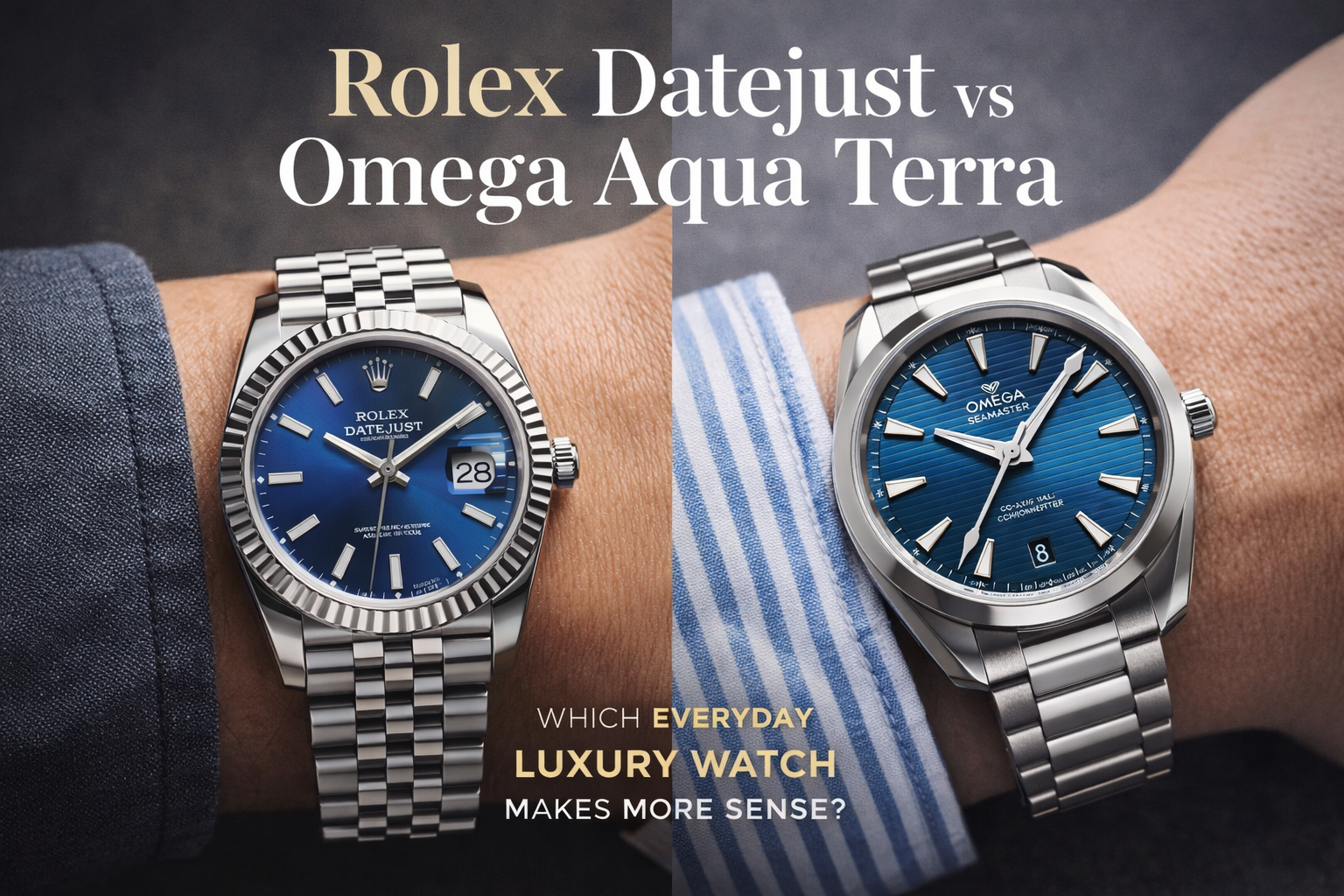
Rolex Datejust vs Omega Aqua Terra: the quick answer
If you want the short version, here it is:
Buy the Rolex Datejust if you want the stronger icon, the more recognizable luxury signal, and the watch that usually makes more emotional sense the moment you put it on.
Buy the Omega Aqua Terra if you want the smarter value play, stronger everyday technical specs, and less stress about actually wearing your watch like a daily watch.
If you are torn, the real question is not “which one is better?”
It is this: do you want classic luxury status, or modern luxury practicality?
If you are shopping for one luxury watch that can handle work, travel, weekends, and years of regular wear, two names come up again and again: the Rolex Datejust and the Omega Aqua Terra.
This is one of the most common real-world buying decisions in modern watch collecting, because both watches sit in that sweet spot between dressy and casual. They are versatile, recognizable, and easy to imagine as a long-term “one watch” purchase.
But they do not appeal to the same buyer in the same way.
The Rolex Datejust usually wins the emotional argument. It feels iconic, familiar, and immediately rewarding on the wrist. The Omega Aqua Terra usually wins the rational one. It feels modern, capable, understated, and often easier to justify if you care about practicality as much as prestige.
So which everyday luxury watch makes more sense?
The honest answer is simple: the one that matches your real life, not just your idealized watch fantasy.
The short answer
Buy the Rolex Datejust if you want a watch with stronger heritage, broader recognition, and more classic luxury presence on the wrist.
Buy the Omega Aqua Terra if you want a watch that feels more modern, more relaxed, and often more convincing as a true daily wearer.
That is the short version. But most buyers are not choosing between abstract ideas. They are choosing between two expensive watches that both seem right for slightly different reasons.
That is why this comparison matters.
Why these two watches get compared so often
The Rolex Datejust is one of the safest answers in luxury watches. It looks established. It feels timeless. It works with tailoring, knitwear, office clothes, and most smart-casual wardrobes. It is also one of the first Rolex models many buyers seriously consider when they want something more versatile than a pure sports watch.
The Omega Aqua Terra comes from a different angle. It does not rely as much on icon status. Instead, it attracts buyers who want a luxury watch that feels more contemporary and easier to wear without thinking too much about image.
In other words, the Datejust usually pulls harder on desire, while the Aqua Terra often pulls harder on logic.
That is why the same buyer can genuinely want both.
If you are still figuring out whether the Datejust is even the right Rolex to begin with, it is worth reading Rolex Datejust vs Oyster Perpetual: Which One Is the Better One-Watch Luxury Choice? first, because that comparison helps clarify whether you want classic Rolex polish or a simpler everyday Rolex aesthetic.
Design: classic icon vs modern versatility
The biggest difference between these two watches is not technical. It is emotional and visual.
The Rolex Datejust is one of those watches that people recognize even when they do not know watches well. A fluted bezel, a Jubilee bracelet, a sunburst dial, and that familiar Rolex profile all create a watch that looks unmistakably premium. It often feels a little more formal, a little more polished, and a little more socially legible.
The Omega Aqua Terra is quieter. It looks cleaner, more contemporary, and less eager to announce itself. For some buyers, that is exactly the appeal. It feels like a watch chosen for personal satisfaction rather than public recognition.
That difference matters more than many people expect.
A lot of buyers assume they are choosing between two equally versatile luxury watches. In reality, they are often choosing between two different kinds of daily identity. The Datejust says timeless luxury in a very direct way. The Aqua Terra says thoughtful modern luxury in a much more understated one.
Fit also changes the whole experience. Many people focus too much on case diameter and not enough on how a watch actually sits across the wrist, which is why a good starting point is Watch Size Guide: Case Diameter, Lug-to-Lug & Thickness. A watch can be “the right size” on paper and still feel wrong in real life.
A real buyer example
A buyer I know spent nearly two months going back and forth between a blue Rolex Datejust and a blue Omega Aqua Terra.
He wanted one serious luxury watch he could wear to the office, on weekend dinners, and while traveling. He liked the Rolex because it felt like the watch he had always imagined owning. He liked the Omega because it felt easier to justify and easier to wear without worrying about every little situation.
The first time he tried them on, the Datejust won immediately.
The second time, the Aqua Terra started making more sense.
That is where a lot of people get stuck.
The Datejust gave him a stronger emotional hit. It felt more special. More iconic. More like an achievement. The Aqua Terra felt more natural, more relaxed, and more like something he would actually wear four or five days a week without hesitation.
In the end, he still bought the Datejust.
Why? Because every time he put it on, it gave him something the Omega did not. It felt like the watch he had really wanted all along.
That does not mean the Datejust was the better technical decision. It means that in luxury watches, emotional truth matters. Sometimes the watch that makes less sense on paper makes more sense once you actually own it.
Everyday wear: which one is easier to live with?
This is where the Aqua Terra becomes very persuasive.
A daily luxury watch is not just about beauty. It is about friction. How much do you think about it? How careful do you feel? How often do you hesitate before putting it on?
For many owners, the Omega Aqua Terra feels easier to live with. It has a lower psychological barrier. It feels sporty enough, refined enough, and modern enough to move through different parts of life without much adjustment.
The Datejust can absolutely be a daily watch too, but it often feels more precious. Not necessarily because it is fragile, but because it carries more symbolic weight. People notice it more. Owners tend to think about it more. It can feel less like a tool you happen to love and more like a luxury object you are managing.
That is not a flaw. For some people, that is the whole point.
But if you want a watch that disappears into daily life in the best possible way, the Aqua Terra often has the advantage.
Comfort matters here too. Bracelet feel, case balance, and the way the watch sits during a full day matter much more than they do in a five-minute showroom impression. Before buying either one, it is smart to revisit Watch Bracelet Sizing Guide: How Tight Should It Be?, because poor sizing can ruin an otherwise perfect watch.
Movement philosophy: practical engineering vs luxury confidence
These two watches also appeal to different mindsets once you start thinking about the movement.
The Omega Aqua Terra often attracts buyers who care about modern watchmaking practicality. It feels like the watch for someone who appreciates engineering confidence, consistent daily performance, and a less romantic, more use-oriented approach to ownership.
The Rolex Datejust appeals to a slightly different buyer. Yes, it is dependable and highly refined, but people usually do not choose it because they want the most technically persuasive spreadsheet argument. They choose it because Rolex has mastered the feeling of durable luxury better than almost anyone.
That is why the Aqua Terra often wins among people who think in terms of real-world resilience, while the Datejust wins among people who think in terms of long-term satisfaction and timeless appeal.
If you care about how a mechanical watch behaves after purchase, this is where related topics become relevant. Someone leaning Aqua Terra often worries about day-to-day performance, while someone leaning Datejust often begins researching longer-term ownership details. That is exactly why articles like Why Is My Watch Running Fast or Slow? 9 Common Causes (And Fixes), Magnetized Watch Symptoms: Why Your Watch Runs Fast & How to Fix It (Safely), and Watch Accuracy Standards Explained: COSC vs METAS (What the Numbers Really Mean) fit so naturally into this buying journey.
They are not side topics. They are part of what helps buyers feel confident after spending real money.
Water, travel, and low-stress ownership
One of the biggest hidden factors in this comparison is stress.
Which watch will you worry about less?
Which one will you take on trips more naturally?
Which one feels like a piece of your life rather than a piece you are trying to protect from life?
This is another area where the Aqua Terra often makes a stronger daily-wear case. It has the kind of personality that encourages use. It looks like the kind of watch that belongs on holidays, airport trays, long weekends, and ordinary summer days.
The Datejust can go with you too, of course. But owners often treat it more carefully, partly because of what it costs and partly because of what it represents.
If your idea of an everyday watch includes real-world exposure to travel, weather, handwashing, swimming, and seasonal use, then your decision should connect to how you actually care for a watch. That is where articles like Water Resistance Explained: What Watch Depth Ratings Really Mean, Can You Swim With a Watch? Pool vs Ocean Water Risks Explained, After Swimming With a Watch: The 7-Step Rinse & Dry Routine (Pool vs Ocean), and Screw-Down Crown Mistakes: The Fastest Way People Ruin Water Resistance become genuinely useful, not just informational.
That is especially true if you want one luxury watch that actually gets worn rather than admired.
Money: the safer badge or the smarter value?
This is where the decision becomes personal very quickly.
The Rolex Datejust often feels safer because Rolex is easier to sell, easier to explain, and easier for non-watch buyers to understand. Even people outside the hobby recognize the brand immediately. That gives many buyers confidence, especially if they think there is any chance they may sell the watch later.
The Omega Aqua Terra often feels smarter because it gives you a lot of what people claim to want in an everyday luxury watch without forcing you to pay mostly for brand aura. It tends to appeal to the buyer who wants strong overall value rather than maximum brand heat.
So the real question is not just which watch costs more.
The real question is what you want your money to buy.
Do you want stronger symbolism, stronger instant recognition, and a more iconic ownership experience?
Or do you want a watch that often feels like the more balanced purchase once the excitement settles down?
For many buyers, the Aqua Terra is easier to defend logically.
For many buyers, the Datejust is easier to love.
The used market: where the Datejust gets riskier
This is where people can make expensive mistakes.
A used Omega Aqua Terra can still require care, but a used Rolex Datejust demands a much sharper eye. There are simply more traps around Rolex. More fake examples. More questionable polishing. More aftermarket parts. More listings that look fine until you know exactly what to check.
And that is exactly why the Datejust is such a common trap. It is one of the most recognized Rolex designs ever made, it comes in many dial colors and configurations, and it attracts first-time luxury buyers who want a watch they can wear every day. If you are already leaning toward the used market, do not buy based on seller confidence alone. Read How to Spot a Fake Rolex Before You Buy: 13 Red Flags That Actually Matter, then follow it with Fake vs Aftermarket vs Franken Watch: The Difference That Can Cost You Thousands and How to Tell If a Watch Is Overpolished Before You Buy. Those three topics alone can save a buyer from making a very expensive first mistake.
If you are planning to meet a seller in person, you should also keep How to Check a Used Watch in Person: 15 Things to Inspect Before You Buy open before sending money or shaking hands. And if a seller is pushing hard on “box and papers,” it helps to understand what actually matters by reading Used Watch Full Set vs Watch Only: How Much Do Box and Papers Really Matter?.
This is also where your brand-information content and replica-watch educational content become powerful. Buyers do not just search for “Datejust vs Aqua Terra.” They search for “fake Datejust signs,” “Rolex Datejust overpolished,” “franken Rolex meaning,” and “used Datejust worth it.” That is exactly the kind of informational-commercial crossover that performs well in both SEO and AI search visibility.
Which one makes more sense for different buyers?
If you want the watch that most people instantly understand as a serious luxury purchase, the Rolex Datejust makes more sense.
If you want the watch that often feels easier to wear, easier to justify, and easier to build real life around, the Omega Aqua Terra makes more sense.
If you dress more formally, care about iconic design language, and want a watch that delivers a strong emotional return every time you look at it, the Datejust is probably the right answer.
If you dress more casually, care about understated quality, and want a watch that blends into daily life while still feeling premium, the Aqua Terra may be the better fit.
This is not really about which one is objectively better. It is about which kind of satisfaction matters more to you.
A simple 5-step decision test
If you are still stuck between the two, try this:
First, ask which watch fits your normal clothes better, not your ideal wardrobe.
Second, ask which watch you would wear more days per month.
Third, ask which one would annoy you less if it picked up a small scratch.
Fourth, ask whether you are buying a watch or buying a feeling.
Fifth, ask which one you would regret not buying if both disappeared tomorrow.
That last question tends to cut through a lot of overthinking.
Final verdict
If you want the more rational everyday luxury watch, the Omega Aqua Terra often makes more sense.
If you want the more emotionally satisfying everyday luxury watch, the Rolex Datejust usually makes more sense.
The Aqua Terra is often the better argument.
The Datejust is often the better dream.
And most luxury-watch buyers, whether they admit it or not, are trying to balance both.
FAQ
Is the Rolex Datejust better than the Omega Aqua Terra?
Not universally. The Datejust is usually stronger in prestige, recognition, and classic luxury appeal. The Aqua Terra is often stronger in understated versatility and everyday practicality.
Which one is better as a first luxury watch?
That depends on your personality. If you want the safer emotional choice, buy the Datejust. If you want the safer rational choice, buy the Aqua Terra.
Which one is better for daily wear?
For low-stress daily wear, many people will prefer the Aqua Terra. For daily wear with more classic luxury presence, many people will prefer the Datejust.
Which one is riskier to buy used?
The Datejust, especially for first-time buyers. That is why it is so important to understand replica risk, aftermarket parts, and condition issues before paying.