Why Is My Watch Running Fast or Slow? 9 Common Causes (And Fixes)
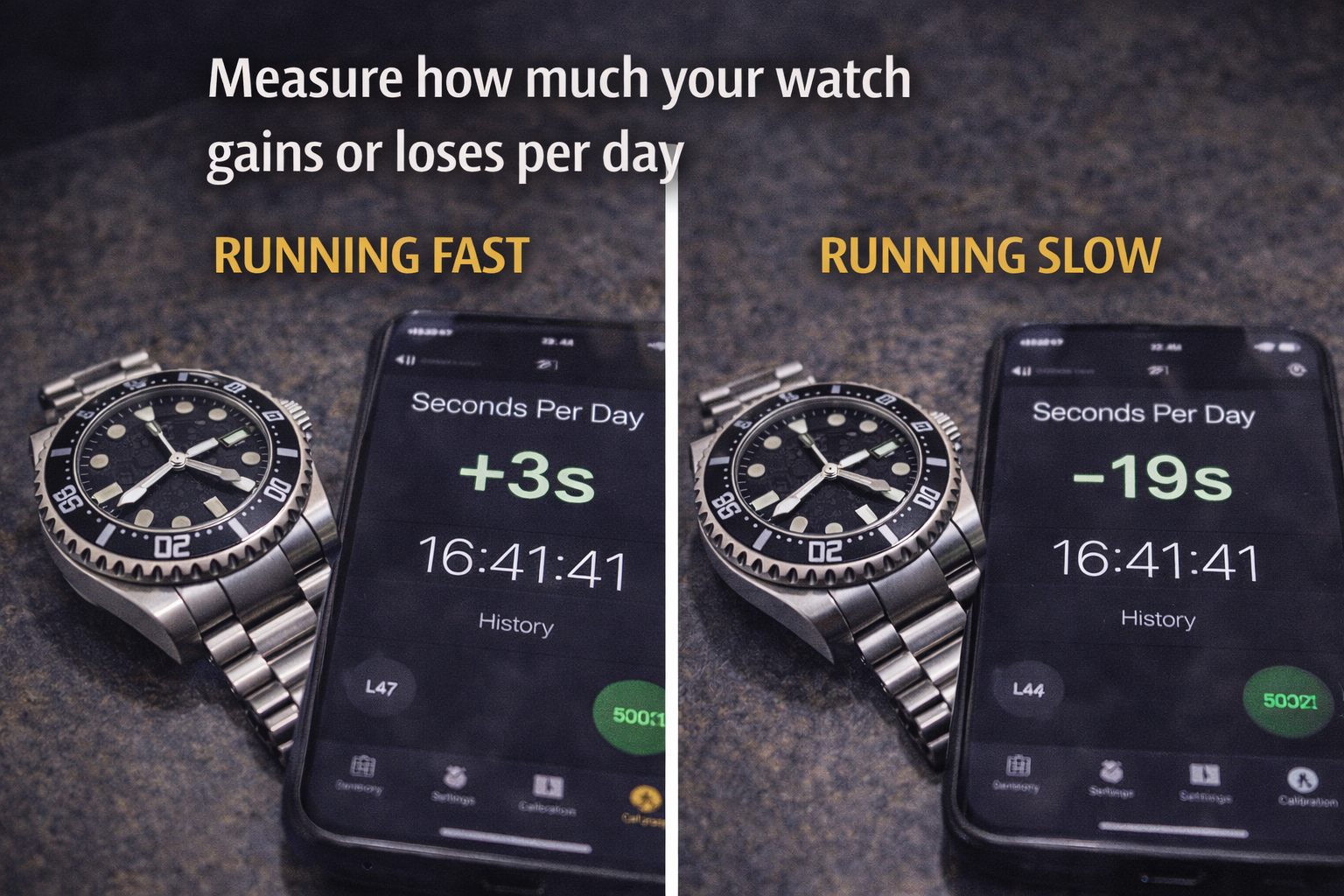 If your watch starts running fast or slow, the cause is usually one of these: magnetism, low power reserve, a shock/impact, temperature changes, or overdue service. The fastest way to narrow it down is to check how much time it gains/loses per day, whether the change was sudden, and whether it happens more in certain places (desk/laptop magnets). Use the checklist below.
Step 1: Measure the problem (2 minutes)
Before troubleshooting, confirm what’s happening:
-
Is it gaining/losing seconds per day or minutes per day?
-
Did it change suddenly or gradually over weeks?
-
Does it change depending on location (work desk vs elsewhere)?
Tip: “Minutes fast per day” often points to magnetism.
The 9 most common causes (and what to do)
1) Magnetism (classic: suddenly running fast)
If your mechanical watch suddenly runs fast—sometimes minutes/day—magnetism is a top suspect.
Fix guide:
→ Magnetized watch symptoms & fix:
Magnetized Watch Symptoms: Why Your Watch Runs Fast & How to Fix It (Safely)
2) Low power reserve (automatic not fully wound)
When an automatic watch is running on low reserve, timing can become less stable.
What to do:
-
Wear it normally for a full day
-
Or wind it properly (if your model allows manual winding)
-
Re-check timing over the next 24 hours
3) Shock or drop (even a small one)
An impact can affect regulation or components.
What to do:
-
If the timing change happened right after a bump, stop guessing and have it checked—especially if the seconds hand stutters or the watch stops intermittently.
Service/inspection baseline:
→ How Often Should You Service a Mechanical Watch? A Practical Maintenance Timeline
4) Overdue service (oil drying out, wear increasing)
Gradual worsening over months/years is often a maintenance issue.
Signs it may be service-related:
-
timing drift gradually increases
-
power reserve seems shorter than before
-
winding feels rough/gritty
Service timeline:
→ How Often Should You Service a Mechanical Watch? A Practical Maintenance Timeline
5) Temperature extremes (heat/cold swings)
Mechanical parts and lubricants behave differently when very hot/cold. Short-term drift can happen if your watch is exposed to repeated extremes.
What to do:
-
Keep it at normal room temperature for 24 hours and re-check timing.
6) Position effect (dial up/dial down/crown up)
Many watches run slightly differently depending on position.
What to do (simple trick):
-
If it runs fast, store it overnight in a position that slightly slows it (varies by watch).
-
If it runs slow, try the opposite.
This is normal within reason; massive drift usually points to magnetism/service issues.
7) Manual winding mistakes (over-winding fear, partial winding)
Manual-wind watches don’t “overwind” in the way people fear (they have safeguards), but inconsistent winding can cause inconsistent rate.
What to do:
-
Wind to a consistent routine (e.g., same time each morning).
8) Dirt/debris inside (rare, but possible)
If a watch was opened improperly or exposed to harsh environments, debris can affect performance.
What to do:
-
Don’t DIY-open the case. Get a professional check.
9) It’s normal variation (within a reasonable range)
Many mechanical watches vary by a few seconds/day. The key is consistency.
If you want a general baseline on keeping a watch stable day-to-day:
-
Daily care:
→ Everyday Watch Care Guide: How to Keep Your Watch Looking New -
Weekly routine:
→ Weekly Watch Care Routine: A Simple 10‑Minute System to Extend Your Watch’s Life
Quick diagnosis chart (fast vs slow)
If your watch is running FAST
Most likely:
-
Magnetism
-
Shock/impact
-
Regulation/service needed
Start here:
-
Magnetism guide: Magnetized Watch Symptoms: Why Your Watch Runs Fast & How to Fix It (Safely)
-
Service: How Often Should You Service a Mechanical Watch? A Practical Maintenance Timeline
If your watch is running SLOW
Most likely:
-
Low power reserve / not fully wound
-
Service needed
-
Position effects
When to stop troubleshooting and see a watchmaker
Go professional if:
-
it gains/loses minutes per day
-
it started suddenly after a drop
-
it stops randomly
-
it has been 5+ years without service and timing is getting worse
→ How Often Should You Service a Mechanical Watch? A Practical Maintenance Timeline
FAQ
1) Why is my watch suddenly running fast?
Magnetism is a very common cause, especially near laptops, speakers, and magnetic clasps.
→ Magnetized Watch Symptoms: Why Your Watch Runs Fast & How to Fix It (Safely)
2) Why is my automatic watch running slow when I don’t wear it much?
Low power reserve. Wear it longer or wind it consistently, then re-check.
3) How many seconds per day is “normal”?
It depends on the movement and regulation, but small variation is normal. Big changes (minutes/day) are not.
4) Can dropping a watch make it run fast or slow?
Yes. Impacts can affect regulation or components. If timing changed right after a drop, get it checked.
5) If I service my watch, will accuracy improve?
Often yes—fresh lubrication and proper regulation can restore stable timing.
→ How Often Should You Service a Mechanical Watch? A Practical Maintenance Timeline
6) Is this related to water resistance?
Not directly, unless moisture entered the case. If you also see fogging, that’s a different urgent situation:
→ mediately Why Is My Watch Fogging Under the Crystal? Causes & Fixes (What to Do Now)
→ Water Got Inside Your Watch? What to Do Immediately (First 30 Minutes)
Related Guides
-
Magnetized Watch Symptoms: Why Your Watch Runs Fast & How to Fix It (Safely)
-
How Often Should You Service a Mechanical Watch? A Practical Maintenance Timeline
-
Everyday Watch Care Guide: How to Keep Your Watch Looking New
-
Weekly Watch Care Routine: A Simple 10‑Minute System to Extend Your Watch’s Life