Why Is My Watch Fogging Under the Crystal? Causes & Fixes
In this guide, we explain:
-
Why fog appears
-
Whether it’s dangerous
-
When it’s temporary
-
When professional service is necessary
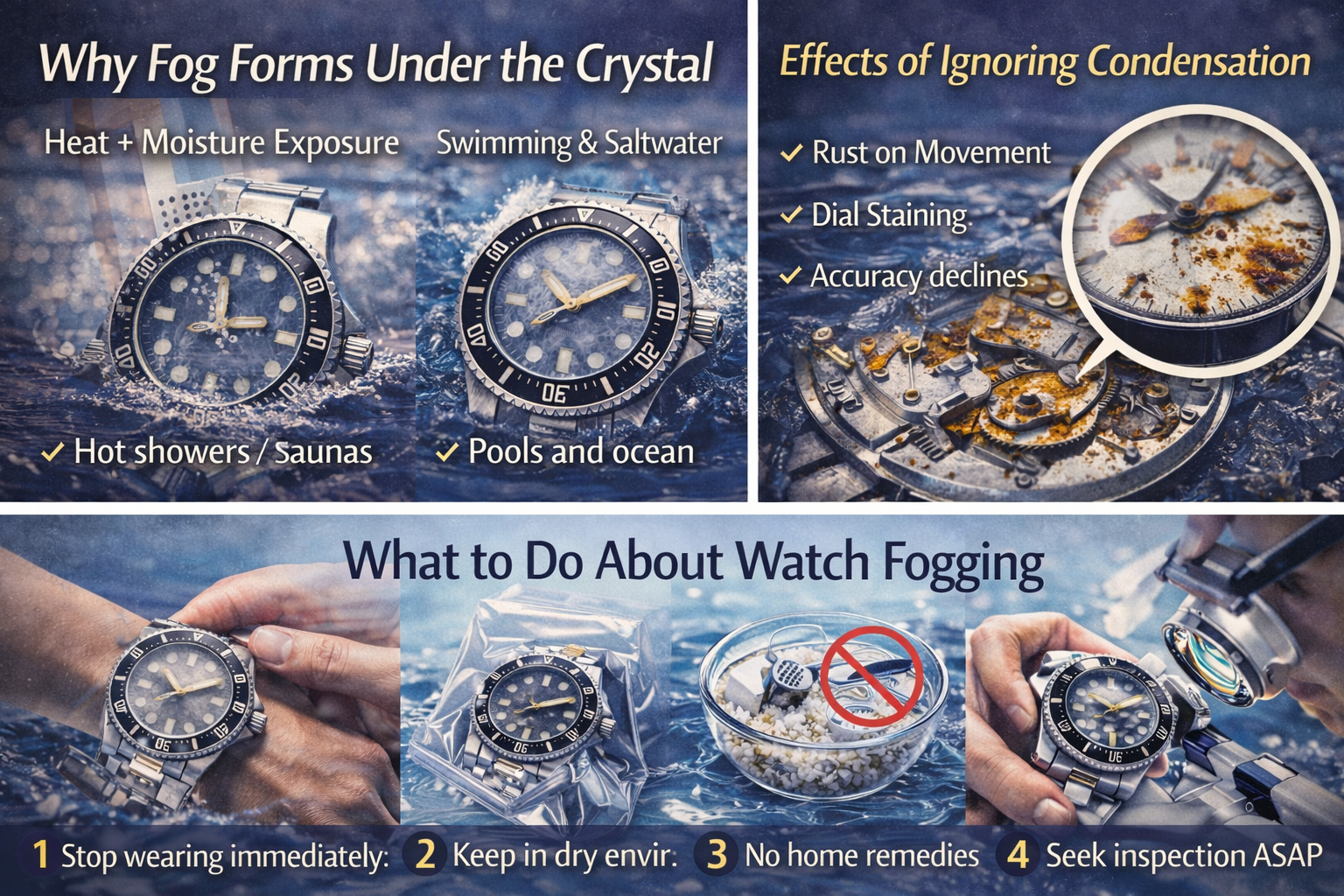 Short Answer: Fog Means Moisture Is Inside
Fogging occurs when:
-
Moist air enters the case
-
Temperature changes cause condensation
-
Internal water vapor turns into visible mist
Even if it disappears later, moisture has already entered.
If you’re unsure what to do immediately, read:
👉 What Happens If Water Gets Inside Your Watch?
Common Causes of Watch Fogging
1️⃣ Heat + Moisture Exposure
Sudden temperature changes create internal condensation.
Common triggers:
-
Hot showers
👉 Is It Safe to Wear a Watch in the Shower? -
Sauna or hot tubs
-
Summer heat + sweat
Heat expands air inside the case, pulling moisture through weakened seals.
2️⃣ Swimming in Pools or Ocean
Water-resistant does not mean chemically resistant.
Fogging often appears after:
-
Pool swimming
👉 Does Chlorine Damage Watches? -
Ocean swimming
👉 Does Salt Water Damage Watches?
Repeated exposure weakens gasket integrity.
3️⃣ Aging or Worn Gaskets
Over time, rubber seals:
-
Lose elasticity
-
Crack
-
Dry out
Water resistance ratings assume fresh seals.
If you’re unsure how ratings work, review:
👉 Watch Water Resistance Explained
Is Temporary Fogging Normal?
Some argue that brief fogging in cold weather is harmless.
However:
-
Any internal condensation means moisture entered
-
Moisture promotes corrosion
-
Lubricants can degrade
Even if fog disappears, the risk remains.
Ignoring condensation is one of the most common
👉 watch care mistakes.
What Damage Can Fogging Cause?
Moisture inside the case can lead to:
-
Rust on movement parts
-
Dial staining
-
Reduced accuracy
-
Crown stiffness
Mechanical watches are especially sensitive because they rely on precise lubrication.
Service intervals become critical — learn more here:
👉 How Often Should You Service a Mechanical Watch?
When Should You Seek Professional Service?
Immediate inspection is recommended if:
-
Fog persists for hours
-
Droplets are visible
-
Accuracy changes suddenly
-
The watch has recent water exposure
Delaying service increases corrosion risk.
Can a 200m Watch Still Fog?
Yes.
High ratings do not prevent:
-
Heat-induced pressure change
-
Chemical gasket degradation
-
Age-related seal wear
If you’re comparing ratings, see:
👉 100m vs 200m: Do You Really Need a Dive Watch?
Maintenance matters more than depth numbers.
How to Prevent Watch Fogging
To reduce risk:
-
Avoid heat + moisture combinations
-
Rinse after pool or ocean exposure
-
Service gaskets regularly
-
Check crown position
If you swim often, read:
👉 Can You Swim With a Watch?
Conclusion
Fogging under the crystal is not cosmetic — it’s a warning sign.
Even brief condensation indicates compromised sealing.
Prompt action prevents internal corrosion and long-term damage.
Understanding fogging is essential for responsible watch ownership.