Does Chlorine Damage Watches? What Pool Water Really Does
Over time, chlorinated pool water can degrade seals, fade materials, and shorten a watch’s lifespan — especially with frequent exposure.
In this guide, we explain how chlorine affects watches, which components are most vulnerable, and how to protect your timepiece after swimming.
 Short Answer: Yes, Chlorine Can Damage Watches Over Time
Brief exposure to chlorinated water is usually manageable for watches rated 100m or higher.
However, repeated exposure can:
-
Dry out rubber gaskets
-
Accelerate seal degradation
-
Fade bezels and inserts
-
Increase corrosion risk
Water resistance ratings do not account for chemical exposure.
If you’re unsure how ratings work, read our guide on
👉 watch water resistance explained.
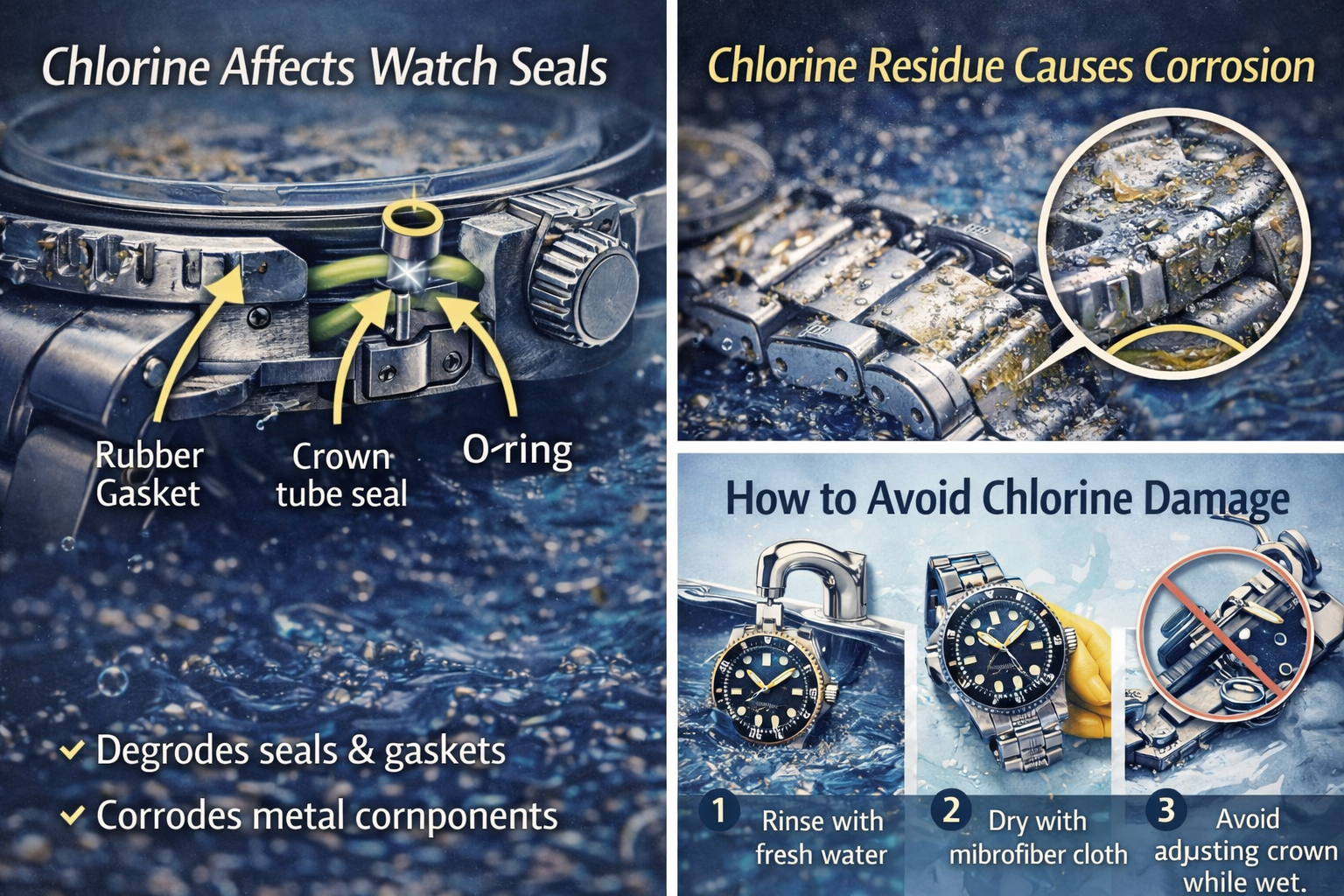
How Chlorine Affects Watch Seals
Chlorine is a chemical disinfectant designed to break down organic material.
Unfortunately, it also affects:
-
Rubber gaskets
-
O-ring seals
-
Crown tube seals
Over time, seals lose elasticity, reducing effective water resistance.
This is one reason frequent swimmers should understand
👉 how often to service a mechanical watch.
Does Chlorine Damage Stainless Steel?
High-quality stainless steel resists corrosion well.
However, chlorine can:
-
Cause micro-pitting
-
Leave residue between bracelet links
-
Dull polished surfaces
If left unrinsed, chlorine residue may accelerate long-term corrosion.
Saltwater behaves differently — see our comparison in
👉 Can You Swim With a Watch? Pool vs Ocean Explained.
Is a 100m or 200m Watch Safe in a Pool?
For occasional swimming:
-
100m is generally safe
-
200m provides extra margin
But safety depends more on:
-
Gasket condition
-
Age of the watch
-
Heat exposure
Even high-rated watches can be compromised by
👉 heat and steam exposure in saunas or hot tubs.
Chlorine vs Salt Water: Which Is Worse?
Both present risks:
| Factor | Chlorine | Salt Water |
|---|---|---|
| Seal degradation | High | Moderate |
| Metal corrosion | Moderate | High |
| Residue buildup | Moderate | High |
Neither should be ignored.
How to Protect Your Watch After Pool Swimming
Always:
-
Rinse thoroughly with fresh water
-
Dry with a microfiber cloth
-
Avoid adjusting the crown while wet
These small steps prevent many common
👉 watch care mistakes.
Signs Chlorine Has Caused Damage
Watch for:
-
Fogging under the crystal
-
Crown stiffness
-
Bracelet discoloration
-
Reduced water resistance
If fog appears, stop wearing the watch immediately and seek inspection.
Conclusion
Chlorine won’t destroy a watch overnight — but repeated exposure without proper care can weaken seals and shorten service intervals.
If you swim occasionally, rinse thoroughly.
If you swim frequently, factor chemical exposure into your maintenance schedule.
Understanding chlorine risk is part of responsible watch ownership.