10 Watch Care Mistakes That Ruin Your Watch Faster Than You Think (2026)
In this guide, we’ll break down the 10 most common watch care mistakes that quietly shorten a watch’s lifespan, damage its appearance, and lead to expensive repairs. If you want your watch to look good and run accurately for years, avoid these at all costs.
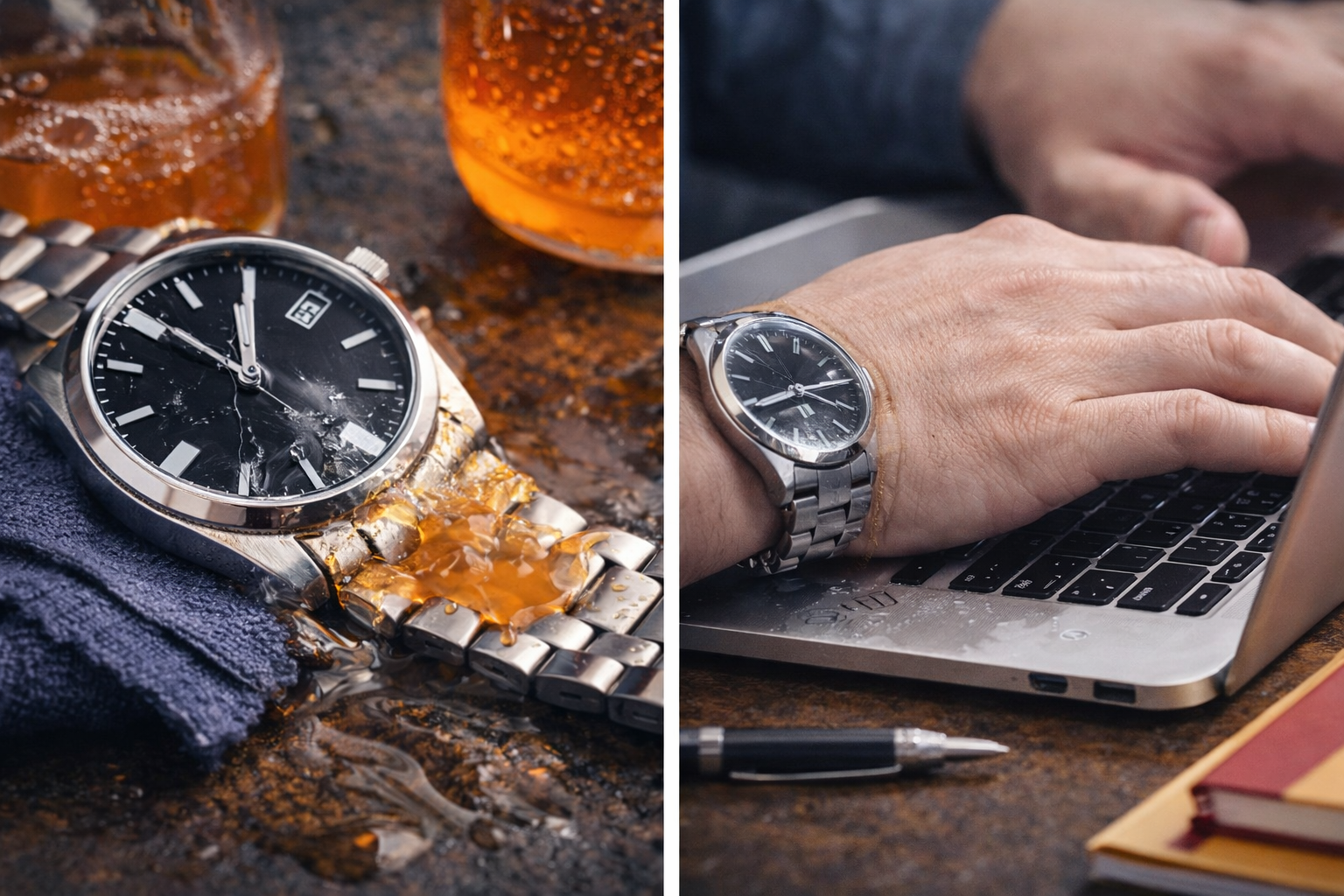 1. Assuming “Water-Resistant” Means Waterproof
One of the most expensive misconceptions in watch ownership.
Water resistance degrades over time due to:
-
Aging rubber gaskets
-
Temperature changes
-
Crown misuse
Result: Moisture enters the case → rust → movement damage.
👉 Water resistance must be maintained, not trusted forever.
2. Wearing Your Watch in the Shower
Hot showers combine steam, heat, and soap — the worst trio for watches.
Why it’s dangerous:
-
Steam penetrates seals more easily than water
-
Soap breaks down gaskets
-
Heat causes metal expansion
Even dive watches aren’t designed for daily shower use.
3. Ignoring the Crown Position
An improperly seated crown is the #1 cause of water damage.
Common mistakes:
-
Forgetting to screw down the crown
-
Pulling the crown in humid environments
-
Adjusting time underwater
Always check the crown before washing hands or going outside in rain.
4. Never Cleaning Your Watch
Sweat, dust, and skin oils build up faster than most people think.
What happens over time:
-
Bracelet corrosion
-
Skin irritation
-
Premature strap failure
A dirty watch doesn’t just look bad — it ages faster internally.
5. Over-Cleaning With Harsh Chemicals
Cleaning is good. Over-cleaning is not.
Avoid:
-
Alcohol wipes on coated cases
-
Household cleaners
-
Ultrasonic cleaners at home
These strip finishes and weaken seals.
6. Leaving Your Watch Near Magnets
Magnets are everywhere:
-
Phone cases
-
Speakers
-
Tablets
-
Laptop covers
Magnetized watches:
-
Run fast
-
Lose accuracy
-
Require demagnetization
Mechanical watches are especially vulnerable.
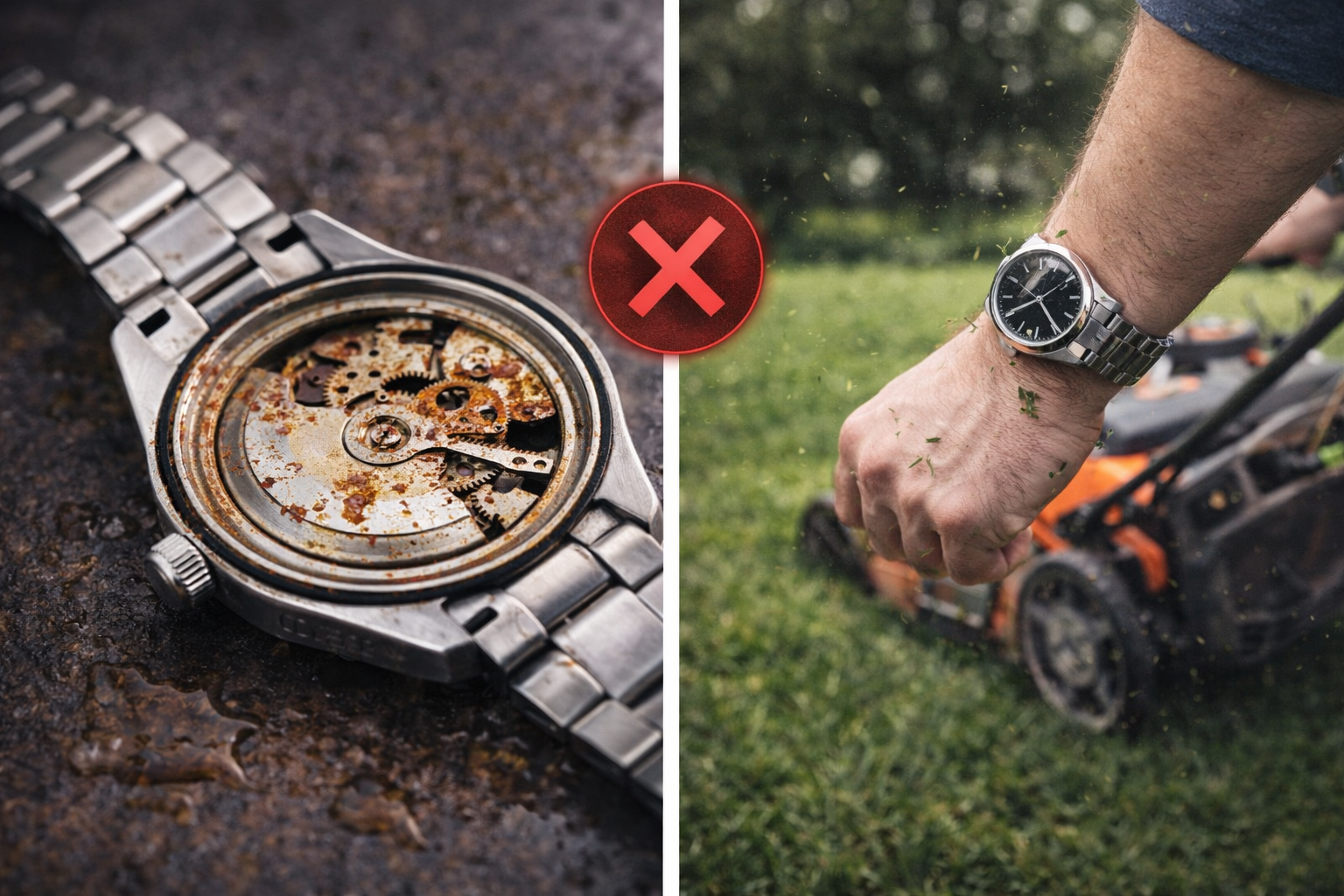 7. Wearing the Same Watch Every Single Day
Constant wear accelerates:
-
Case scratches
-
Bracelet stretch
-
Gasket fatigue
Rotation allows watches to:
-
Dry fully
-
Reduce stress on seals
-
Extend service intervals
Even a simple two-watch rotation helps.
8. Storing Watches Incorrectly
Common storage mistakes:
-
Leaving watches in humid bathrooms
-
Exposing them to sunlight
-
Tossing them loose in drawers
Proper storage prevents:
-
Rust
-
Dial discoloration
-
Strap cracking
9. Ignoring Accuracy Changes
Your watch communicates problems through timekeeping.
Warning signs:
-
Sudden gain/loss
-
Skipping seconds (quartz)
-
Inconsistent accuracy
Early service is far cheaper than late repair.
10. Waiting Too Long for Professional Service
Servicing isn’t optional — it’s preventive care.
Delaying service leads to:
-
Increased friction
-
Part wear
-
Movement replacement costs
A routine service costs far less than fixing neglect.
Conclusion
Most watch damage is avoidable. By eliminating these common mistakes, you protect not just your watch’s appearance — but its mechanical heart.
If you already follow daily and weekly care routines, avoiding these mistakes is the final step to long-term watch ownership.
Related Guides: