Is It OK to Wear a Watch in the Rain? What’s Safe & What to Check First
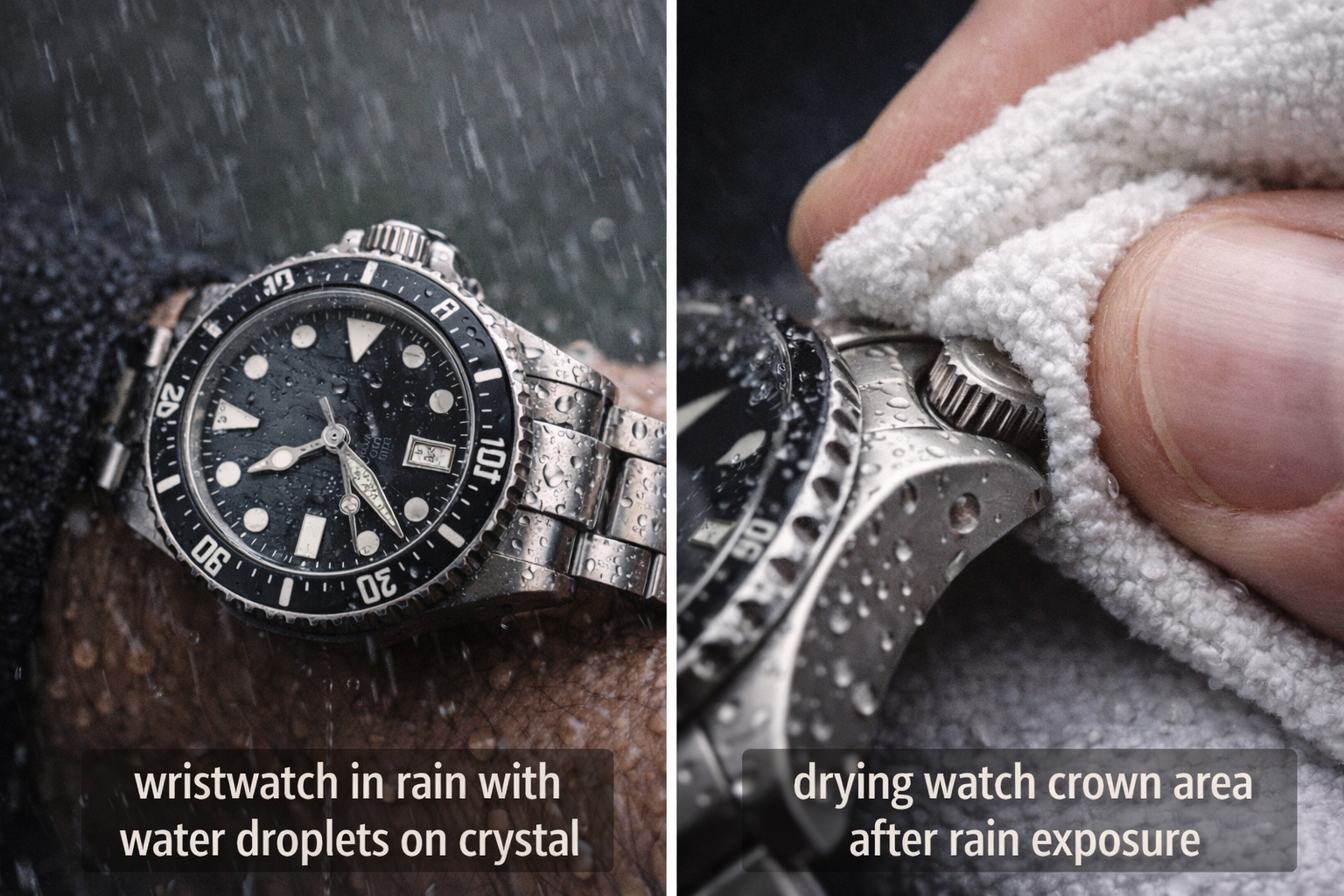 Yes—most watches can handle rain if the crown is fully secured and the seals are in good condition. The real risks come from an open/loose crown, aging gaskets, and pressure from water hitting the crown area (running, cycling, shaking water off). If your watch fogs afterward, treat it as a warning sign and take action.
Why rain is usually safer than showers (but still not “risk-free”)
Rain is typically cool fresh water, which is easier on seals than heat/steam. The shower is riskier because steam + soap + heat cycles stress gaskets and can pull moisture inside.
Related guide (steam risk):
→How Often Should You Service a Mechanical Watch? A Practical Maintenance Timeline
What makes rain risky? (The 4 most common causes)
1) The crown isn’t fully sealed
This is the #1 reason rain causes problems.
-
Screw-down crown not screwed down
-
Crown pulled out earlier for time/date adjustment
-
Crown bumped/loosened during activity
2) Aging gaskets (it used to be fine… until it wasn’t)
A watch can be “water resistant” on paper but fail in practice if gaskets have dried out or cracked.
3) Water pressure from motion (running, cycling, shaking your wrist)
Rain itself is low pressure, but motion can push water into vulnerable areas—especially around the crown and pushers.
If you plan to swim with the watch, that’s a separate risk category:
→Can You Swim With a Watch? Pool vs Ocean Water Risks Explained
4) Chronograph pushers and “button presses”
If your watch has pushers, avoid pressing them in wet conditions unless the watch is specifically designed for that.
Quick safety checklist (before you walk into the rain)
Use this 15-second check:
-
Crown fully pushed in
-
If screw-down: crown fully screwed down
-
Avoid pressing pushers
-
If the watch is older (3–5+ years) and never tested: treat as “splash only”
Water rating reality check:
-
30m: splashes only, be cautious
-
50m: usually OK for rain/hand washing
-
100m+: comfortable for rain (still avoid steam)
More detail:
→ Is 50m Water Resistance Enough? What You Can (and Can’t) Do
→ 100m vs 200m Water Resistance: Do You Really Need a Dive Watch?
What to do if your watch got soaked in the rain
Step 1: Dry it properly (2 minutes)
-
Wipe case and crystal with a soft cloth
-
Dry the crown area carefully
-
If leather strap: remove it and let it dry at room temperature
Step 2: Watch for fogging
Fogging means moisture may have entered the case.
Fogging guide:
→Why Is My Watch Fogging Under the Crystal? Causes & Fixes (What to Do Now)
Step 3: If you see droplets under the crystal, treat it as urgent
Use the immediate emergency plan (first 30 minutes):
→What Happens If Water Gets Inside Your Watch? What To Do Immediately
Rain vs ocean vs pool: why water type matters
Rain is fresh water. But if you’re in coastal areas or mixing exposures:
-
Pool water contains chlorine (more harmful to seals/materials)
→ Does Chlorine Damage Watches? What Pool Water Really Does -
Ocean water is saltwater (corrosion + crystallization risk)
→Does Salt Water Damage Watches? Ocean Exposure Explained
Signs rain exposure may have caused a problem
Check the next 24 hours for:
-
fogging/haze under the crystal
-
crown feels gritty or stiff
-
the watch stops or behaves irregularly
-
sudden accuracy changes
If any appear, read:
→Why Is My Watch Fogging Under the Crystal? Causes & Fixes (What to Do Now)
and if water is suspected inside:
→ What Happens If Water Gets Inside Your Watch? What To Do Immediately
How to reduce rain risk long-term
-
Don’t adjust time/date in damp conditions
-
Get periodic water resistance testing (especially if you swim or the watch is older)
-
Avoid steam even if rain is fine
→ Is It Safe to Wear a Watch in the Shower? The Truth About Water, Steam & SoapStore properly to reduce moisture issues over time
→ How to Store Watches Properly When Not Wearing Them
FAQ
1) Can I wear a 30m watch in the rain?
Sometimes, but it’s “splash-level.” If the watch is older or the crown isn’t perfectly sealed, it’s safer to avoid heavy rain.
→Water Resistance Explained: What Watch Depth Ratings Really Mean
2) Is 50m water resistance enough for rain?
Yes, for most people it’s fine for rain and hand washing, assuming seals are healthy.
→ Is 50m Water Resistance Enough? What You Can (and Can’t) Do
3) Is rain safer than showering with a watch?
Usually yes. Showers add steam, soap, and heat cycles.
→Is It Safe to Wear a Watch in the Shower? The Truth About Water, Steam & Soap
4) What if my watch fogs after being in the rain?
Fogging means moisture may be inside. Start here:
→Why Is My Watch Fogging Under the Crystal? Causes & Fixes (What to Do Now)
5) What should I do if I see droplets under the crystal?
Treat it as urgent and follow the immediate plan:
→Water Got Inside Your Watch? What to Do Immediately (First 30 Minutes)
6) Can rain damage a leather strap?
Yes—leather absorbs water and can crack or smell if dried improperly. Remove it and air-dry at room temperature.
Storage/care:
→How to Store Watches Properly When Not Wearing Them
Related Guides