Why Is My Watch Fogging Under the Crystal? Causes & Fixes (What to Do Now)
If your watch is fogging under the crystal, moisture has entered the case. Don’t use heat (hair dryer, oven, radiator). Instead, keep the watch at room temperature, stop water exposure, and arrange a same-day inspection—especially if fogging is heavy, repeats, or follows pool/ocean use.
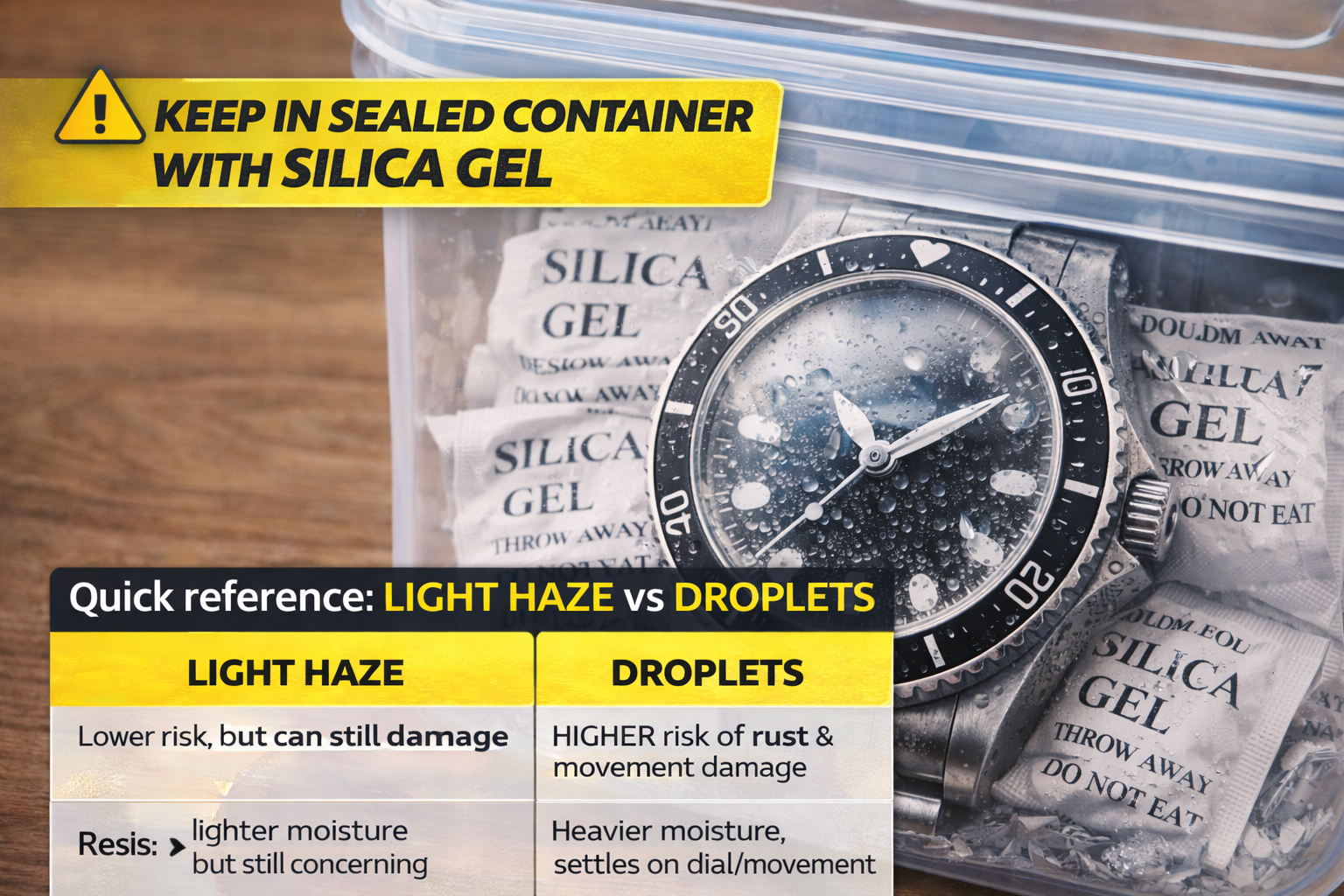 What does fogging actually mean?
Fogging is condensation: warm air inside the watch meets a cooler crystal and water vapor turns into droplets. This is not a cosmetic issue—moisture can damage the dial, hands, and movement oils, and start corrosion.
If you want a clear explanation of ratings like 30m/50m/100m and what they truly mean in real life, read:
Water ratings explained → Water Resistance Explained: What Watch Depth Ratings Really Mean (2026)
Common causes (ranked by how often they happen)
1) Steam + heat (shower, sauna, hot tub)
Steam is sneaky: even if your watch is “water resistant,” heat and pressure changes can push moisture past aging seals.
If fogging started after showering, see the detailed guide here:
Shower risk explained → Is It Safe to Wear a Watch in the Shower? The Truth About Water, Steam & Soap (2026)
2) Crown not fully sealed / screw-down crown not tightened
A crown that’s slightly open is one of the fastest ways for moisture to enter—especially when washing hands or in rain.
3) Aging gaskets (it used to be fine… until it wasn’t)
Gaskets degrade over time. Even a high rating can fail if the seals are old, dry, or damaged.
If you’re not sure how often your watch should be checked/serviced, start here:
Service timeline → How Often Should You Service a Mechanical Watch? A Practical Maintenance Timeline (2026)
4) Pool water (chlorine) or ocean water (salt)
Chlorine and salt accelerate corrosion and can attack seals. Fogging after these exposures is higher urgency.
-
Pool water: chlorine risk → Does Chlorine Damage Watches? What Pool Water Really Does
-
Ocean water: saltwater risk → Does Salt Water Damage Watches? Ocean Exposure Explained
What to do right now (first 30 minutes)
Step 1: Stop exposure & dry the outside
-
Remove the watch from moisture.
-
Dry case, crystal, and bracelet with a soft cloth.
Step 2: Don’t do the “heat hack”
Avoid:
-
hair dryer / heater / radiator
-
oven / microwave
-
leaving it in direct sun to “bake it out”
Heat can warp seals and push moisture deeper.
Step 3: Keep it at room temperature
-
Place the watch in a dry, ventilated room.
Step 4 (optional): Sealed container + silica gel
If you have silica gel packs, you can place the watch in a sealed container with multiple packs. This can reduce humidity until you get professional help.
If you suspect actual water got inside (not just light fog), follow this emergency plan:
Water inside emergency steps → Water Got Inside Your Watch? What To Do Immediately (First 30 Minutes)
When fogging is an emergency (go same-day)
Go to a watchmaker the same day if any of these apply:
-
You see droplets (not just haze)
-
Fogging returns repeatedly
-
The watch was in a pool or ocean
-
The watch stops / runs erratically
-
It’s a mechanical/automatic or high-value piece
Quick self-check: light haze vs droplets
Light haze that clears quickly can happen with temperature swings, but it’s still a warning sign.
Droplets under the crystal usually mean there’s enough moisture inside to cause real damage. Treat it as urgent.
How to prevent fogging in the future
1) Avoid steam situations
Shower/sauna/hot tub are much riskier than most people think.
→ Wear a watch in the shower?
2) Always secure the crown
If it’s screw-down, tighten it gently but fully (don’t overtighten).
3) Test water resistance periodically
Especially if:
-
the watch is 3–5+ years old
-
the case was opened for service or battery change
-
you swim with it often
4) Service when symptoms show up
If accuracy changes, winding feels rough, or fogging happens once, it’s time to inspect.
→ Mechanical service interval
FAQ (for Google long-tail coverage)
1) Why is my watch fogging after washing my hands?
Most often the crown wasn’t fully sealed, or seals are aging. Repeated fogging suggests moisture is inside.
2) My watch fogged and then cleared—am I safe?
Not always. Clearing can mean moisture redistributed, not disappeared. If it happened once, monitor closely and consider inspection.
3) Can I dry my watch with rice?
Rice is inconsistent and can introduce dust. Silica gel is more reliable as a temporary measure, but it doesn’t replace professional drying if water entered.
4) Is fogging covered under warranty?
Depends on brand and cause. If seals failed under normal use it might be, but many warranties exclude water damage. A watchmaker can document the condition.
5) Does 100m water resistance prevent fogging?
It helps, but ratings assume intact seals and ideal conditions. Steam, aging gaskets, and crown issues can still let moisture in.
→ Water resistance explained
6) Should I keep wearing the watch to “warm it up”?
No. Wear won’t remove internal moisture and may worsen corrosion over time.
Suggested internal link block
Related Guides
-
Water Got Inside Your Watch? What To Do Immediately (First 30 Minutes)
-
Water Resistance Explained: What Watch Depth Ratings Really Mean (2026)
-
Is It Safe to Wear a Watch in the Shower? The Truth About Water, Steam & Soap (2026)
-
How Often Should You Service a Mechanical Watch? A Practical Maintenance Timeline (2026)