Does Hand Sanitizer (Alcohol) Damage Watches? What It Ruins & How to Clean It
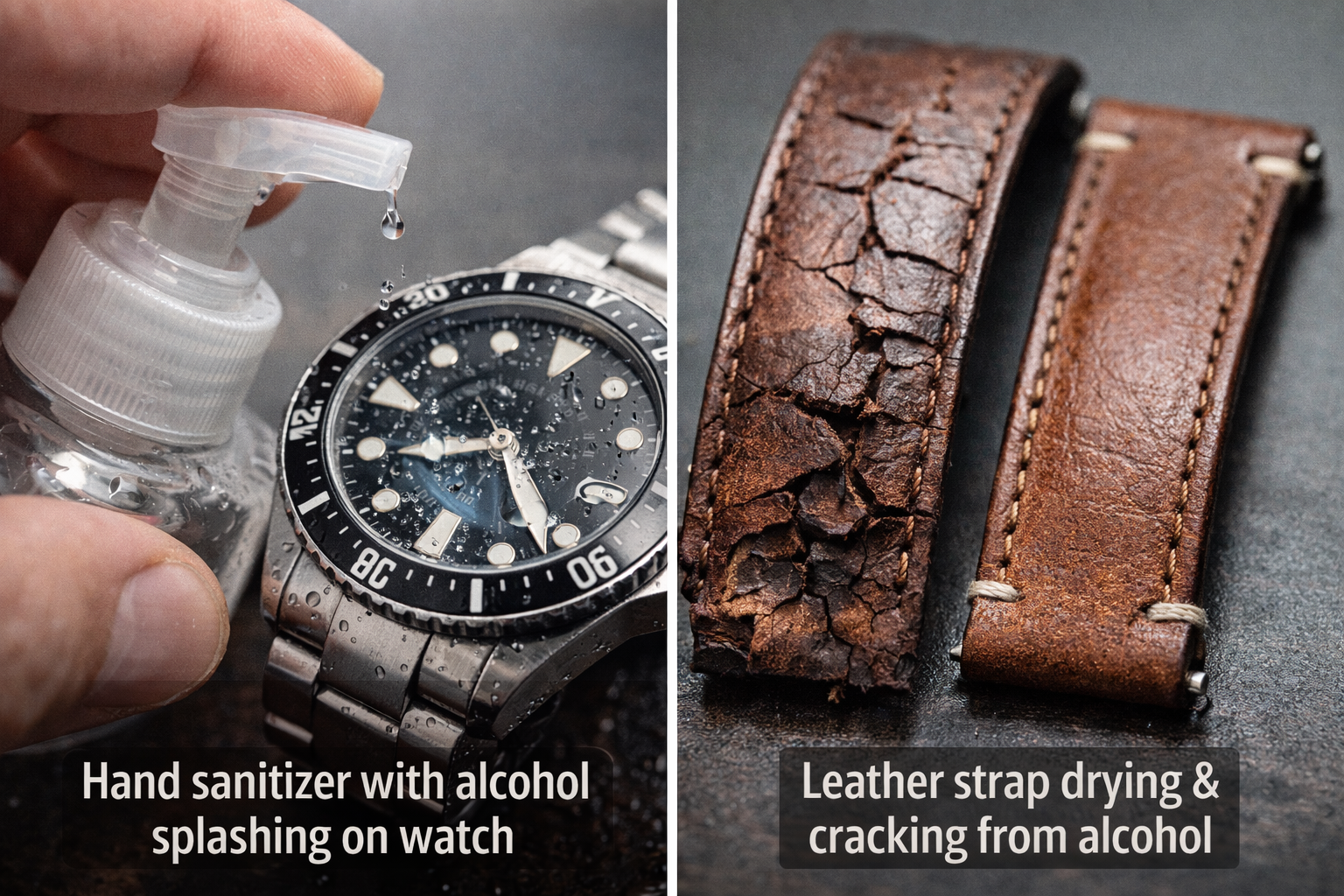
A single accidental splash is usually not catastrophic, but repeated exposure (daily use) can dry materials out, weaken seals, and cause discoloration. If sanitizer gets on your watch, wipe it off immediately and clean the exterior properly.
 Why sanitizer is different from “just water”
Most hand sanitizers are 60–80% alcohol plus additives (fragrance, moisturizers, gels). Alcohol evaporates fast, but while it’s wet it can:
-
dissolve or weaken oils/finishes
-
dry out leather and some rubbers
-
creep into small gaps around the crown, bezel, and caseback seams
If you want the baseline of what water resistance actually means (because people often confuse sanitizer damage with water damage), start here:
→ Water Resistance Explained: What Watch Depth Ratings Really Mean
What sanitizer can damage (most to least common)
1) Leather straps (highest risk)
Alcohol strips oils and moisture from leather, causing:
-
drying, cracking, stiffness
-
color fading or staining
-
bad odor over time
Related storage/care:
→ How to Store Watches Properly When Not Wearing Them (2026)
2) Rubber gaskets & seals (long-term risk)
Repeated alcohol exposure can dry out certain elastomers and accelerate aging. That matters because seals are your “water resistance.”
If your watch is a few years old or you use sanitizer daily, plan periodic checks:
→ How Often Should You Service a Mechanical Watch? A Practical Maintenance Timeline
3) Coatings and finishes (spotting/discoloration)
Depending on the watch, alcohol can affect:
-
anti-reflective (AR) coatings on crystal
-
painted markers/printing on dial (rare but possible with repeated contact)
-
plated finishes if harsh rubbing is used
If you ever see fogging afterward, that’s a different issue (moisture inside):
→ Why Is My Watch Fogging Under the Crystal? Causes & Fixes (What to Do Now)
4) Bracelet gaps & grime buildup (secondary issue)
Gel sanitizers can leave residue in:
-
bracelet links
-
bezel edge
-
crown guards
Over time residue attracts dirt and can make a watch look dull.
Is it safe for stainless steel watches?
Stainless steel itself is usually fine, but the “weak points” are:
-
strap material (leather/rubber)
-
gaskets
-
coatings/printing
-
adhesives (on some parts)
So: metal case ≠ whole watch is safe.
What to do if sanitizer gets on your watch (2-minute cleanup)
Step 1: Wipe immediately
Use a soft, dry microfiber cloth to remove wet sanitizer.
Step 2: If it was gel sanitizer, do a gentle rinse (only when crown is sealed)
If you are sure the crown is closed (especially screw-down), you can:
-
lightly rinse the outside with clean fresh water
-
then dry thoroughly
If you’re unsure about water resistance, don’t rinse—just wipe and dry.
Need help understanding what your rating can handle?
→ Water Resistance Explained: What Watch Depth Ratings Really Mean
Step 3: Dry the crown area and link gaps
Use a dry cloth and gentle pressure; avoid hard brushing.
What NOT to do
❌ Don’t use acetone, paint thinner, or strong solvents
These are far harsher than sanitizer and can damage plastics, gaskets, and finishes quickly.
❌ Don’t scrub aggressively
Aggressive scrubbing causes micro-scratches and can wear coatings.
❌ Don’t “test” water resistance after sanitizer exposure
Don’t go straight to shower/swim to “check if it’s fine.” Steam and soap add extra risk:
→Is It Safe to Wear a Watch in the Shower? The Truth About Water, Steam & Soap
→ Can You Swim With a Watch? Pool vs Ocean Water Risks Explained
Quick safety guide by strap type
| Strap/Bracelet | Sanitizer risk | Best practice |
|---|---|---|
| Stainless steel bracelet | Low–Medium | wipe fast, rinse if crown sealed |
| Rubber/silicone strap | Medium | wipe fast, avoid daily soaking |
| Leather strap | High | avoid contact; remove watch before sanitizing |
| Fabric/NATO | Medium | can absorb gel; rinse strap separately if needed |
When sanitizer exposure becomes a real problem
If you use sanitizer 10+ times a day with the watch on
That’s repeated chemical exposure. Over months, it can:
-
dry out straps
-
age gaskets faster
-
cause residue buildup
At that point, treat it like maintenance:
-
periodic seal checks
-
strap replacement plan
General care routines help:→Weekly Watch Care Routine: A Simple 10‑Minute System to Extend Your Watch’s Life
→Everyday Watch Care Guide: How to Keep Your Watch Looking New
If sanitizer got near the crown and now the watch fogs…
Fogging means possible moisture inside the case—don’t ignore it:
-
Follow the fogging guide:
→mediately Why Is My Watch Fogging Under the Crystal? Causes & Fixes (What to Do Now) -
If you suspect water got inside, follow the emergency plan:
→Water Got Inside Your Watch? What to Do Immediately (First 30 Minutes)
FAQ
1) Will hand sanitizer ruin my watch immediately?
Usually no. One splash is rarely fatal, but repeated exposure can damage straps, seals, and coatings over time.
2) Is alcohol worse than soap?
For materials like leather and some rubbers, yes—alcohol dries them out. Soap is usually safer but still leaves residue.
3) Can sanitizer damage water resistance?
Indirectly, yes—by aging gaskets faster. Water resistance depends on seal condition.
→Water Resistance Explained: What Watch Depth Ratings Really Mean
4) What if sanitizer gets under the bezel or into bracelet links?
Wipe first, then (if crown sealed) a gentle rinse can help remove residue, then dry thoroughly.
5) Should I take my watch off before using sanitizer?
If you wear leather, yes—strongly recommended. If you wear steel, it’s still smarter to sanitize first, then put the watch on.
6) My watch fogs after sanitizer—what does that mean?
Fogging usually indicates moisture inside the case, not sanitizer itself.
→ mediately Why Is My Watch Fogging Under the Crystal? Causes & Fixes (What to Do Now)
Related Guides
-
Water Resistance Explained: What Watch Depth Ratings Really Mean
-
Is It Safe to Wear a Watch in the Shower? The Truth About Water, Steam & Soap
-
Can You Swim With a Watch? Pool vs Ocean Water Risks Explained
-
mediately Why Is My Watch Fogging Under the Crystal? Causes & Fixes (What to Do Now)
-
Water Got Inside Your Watch? What to Do Immediately (First 30 Minutes)
-
Everyday Watch Care Guide: How to Keep Your Watch Looking New