Watch Strap Materials Guide: Bracelet vs Leather vs Rubber vs Nylon (What to Choose)
 Short Answer
-
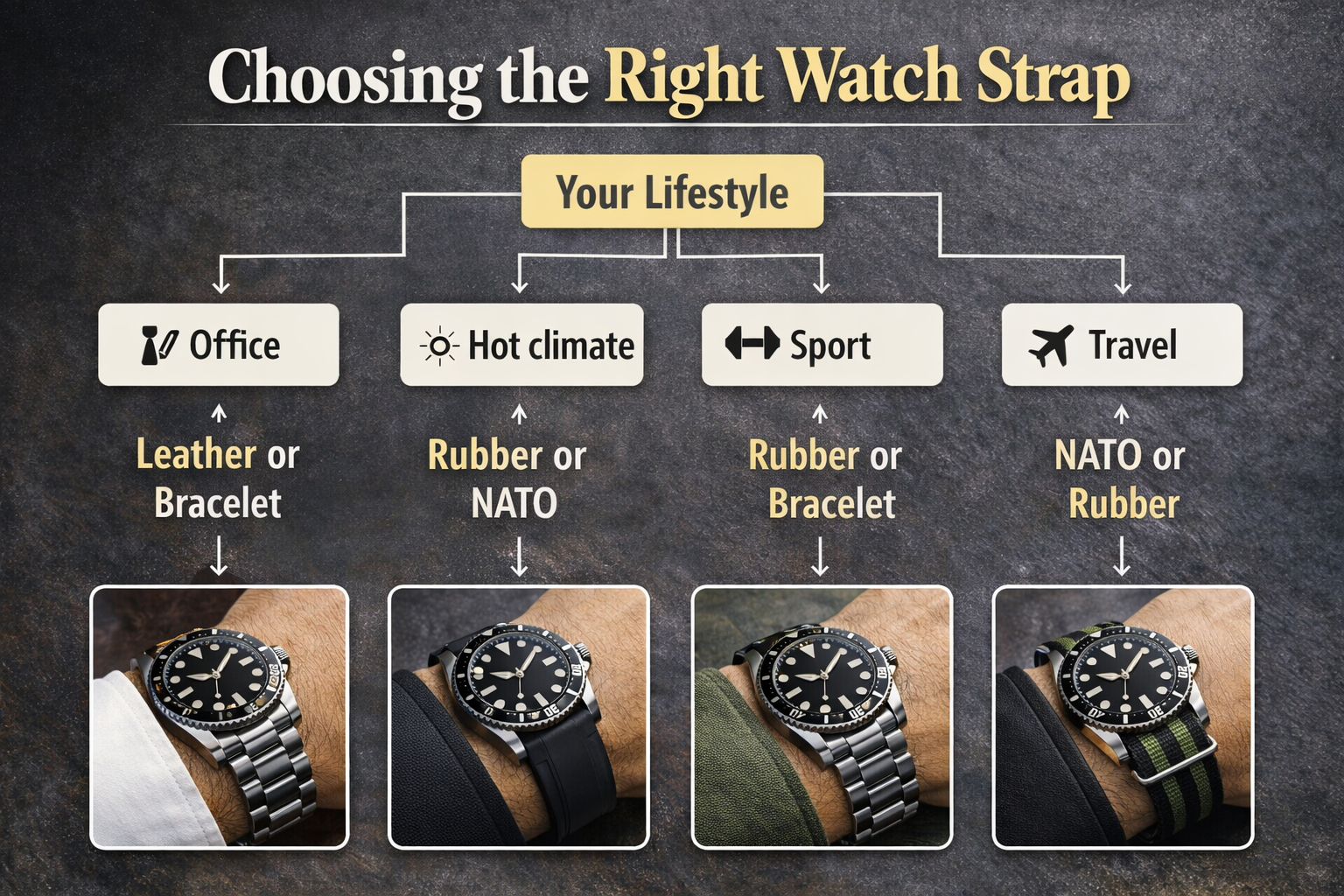
Steel bracelet: most durable, easiest long-term daily option, but heavier and needs sizing.
-
Leather: best for dress and comfort, but ages faster and needs more care.
-
Rubber: best for sporty comfort and sweat resistance, but can attract dust and may age/crack over time.
-
Nylon/NATO: lightweight and breathable, great casual option, but adds thickness and can wear faster.
If you’re unsure about watch proportions first, read your sizing guide:
→ Watch Size Guide: Case Diameter, Lug-to-Lug & Thickness (How to Choose the Perfect Fit)
1) Bracelet (Stainless Steel): the “default best” for many people
Pros
-
Extremely durable and long-lasting
-
Easy to keep looking good with routine cleaning
-
Stable on wrist when sized correctly
-
Works with most styles (sport to smart-casual)
Cons
-
Heavier than straps
-
Needs correct sizing; too loose feels sloppy
-
Scratches show over time (normal)
Best for: everyday wear, one-watch collections, office + weekend.
Daily care reference:
→ Everyday Watch Care Guide: How to Keep Your Watch Looking New
2) Leather: the king of “dress + comfort”
Pros
-
Comfortable, lightweight, classic look
-
Instantly makes a watch feel slimmer and dressier
-
Easy way to change a watch’s vibe
Cons
-
Wears out faster than metal (creases, drying, odor)
-
Needs proper storage habits to last
-
Not ideal for heavy sweat / very humid conditions
Best for: dress watches, office style, light daily wear.
Storage tips (to extend strap life):
→ How to Store Watches Properly When Not Wearing Them
3) Rubber: sporty comfort, modern versatility
Pros
-
Comfortable, flexible, great grip on wrist
-
Better with sweat than leather
-
Ideal for active lifestyle
Cons
-
Can attract dust/lint
-
Some rubbers age (hardening/cracking) over years
-
Cheaper rubbers can feel sticky
Best for: active daily wear, hot climates, sports looks.
Avoid common strap-killing habits:
→ Weekly Watch Care Routine: A Simple 10‑Minute System to Extend Your Watch’s Life
4) Nylon / NATO: light, casual, and breathable
Pros
-
Lightweight, breathable, comfortable
-
Great for casual style and travel
-
Easy to swap and inexpensive
Cons
-
Adds thickness (watch sits higher)
-
Fabric absorbs sweat; needs washing
-
Faster wear vs metal
Best for: casual, travel, hot days, tool-watch aesthetics.
5) The real decision: match strap to your lifestyle
If you wear dress shirts often
-
Prefer leather or a thinner bracelet
-
Also consider watch thickness from your sizing guide:
→ Watch Size Guide: Case Diameter, Lug-to-Lug & Thickness (How to Choose the Perfect Fit)
If you type/work at a desk all day
-
Bracelet comfort depends on sizing (too loose = annoying)
-
Leather is light and low profile
-
Nylon can feel soft but may snag cuffs
If you sweat a lot / live in hot climates
-
Rubber or breathable nylon often feels best
-
Leather needs more maintenance and storage discipline
→ How to Store Watches Properly When Not Wearing Them
6) Strap width & fit (don’t skip this)
Two practical rules:
-
Strap width should match the watch’s lug width (common: 18/20/22mm)
-
A strap can change perceived size:
-
Bracelet can make a watch feel bigger/heavier
-
Leather can make it feel slimmer
-
NATO makes it sit higher
Related: crystal and case materials also change “wear feel”:
-
Crystal materials:
→ Sapphire vs Mineral vs Acrylic Watch Crystal: Pros, Cons & Scratch Reality -
Case materials:
→ Watch Case Materials Explained: Steel vs Titanium vs Ceramic vs Bronze (Pros & Cons)
7) Common mistakes (that ruin straps fast)
-
Wearing leather and never letting it dry/air out
-
Storing watches in sealed humid spaces
-
Using harsh cleaners on leather or rubber
-
Wearing a bracelet too loose so it bangs into surfaces
Care routine anchor:
→Everyday Watch Care Guide: How to Keep Your Watch Looking New
FAQ
1) Is a bracelet better than leather?
For durability and low maintenance, yes. For dress comfort and style, leather can be better.
2) Which strap is best for hot weather?
Rubber or nylon tends to be most comfortable.
3) How long does a leather strap last?
Depends on wear and storage, but it’s usually the shortest lifespan option.
→ How to Store Watches Properly When Not Wearing Them
4) Why does my bracelet feel uncomfortable?
Most often it’s sizing—too loose slides, too tight pinches. Also check case thickness and lug-to-lug fit:
→ Watch Size Guide: Case Diameter, Lug-to-Lug & Thickness (How to Choose the Perfect Fit)
5) Does strap choice change how big a watch looks?
Yes. Bracelet adds visual weight; leather slims; NATO adds height.
6) What’s the easiest strap to maintain?
Bracelet is usually easiest long-term; rubber is also easy but can age.
General care:
→ Weekly Watch Care Routine: A Simple 10‑Minute System to Extend Your Watch’s Life
Recommended reading
-
Watch Size Guide: Case Diameter, Lug-to-Lug & Thickness (How to Choose the Perfect Fit)
-
Sapphire vs Mineral vs Acrylic Watch Crystal: Pros, Cons & Scratch Reality
-
Watch Case Materials Explained: Steel vs Titanium vs Ceramic vs Bronze (Pros & Cons)
-
Everyday Watch Care Guide: How to Keep Your Watch Looking New
-
Weekly Watch Care Routine: A Simple 10‑Minute System to Extend Your Watch’s Life