When Art Meets Luxury: Decoding the Creative Collisions in Fashion
In the evolving narrative of fashion, the union of art and luxury has progressed from mere marketing strategy to a profound cultural dialogue. This cross-disciplinary fusion not only injects fresh creativity into brands but elevates everyday accessories to the level of wearable art.
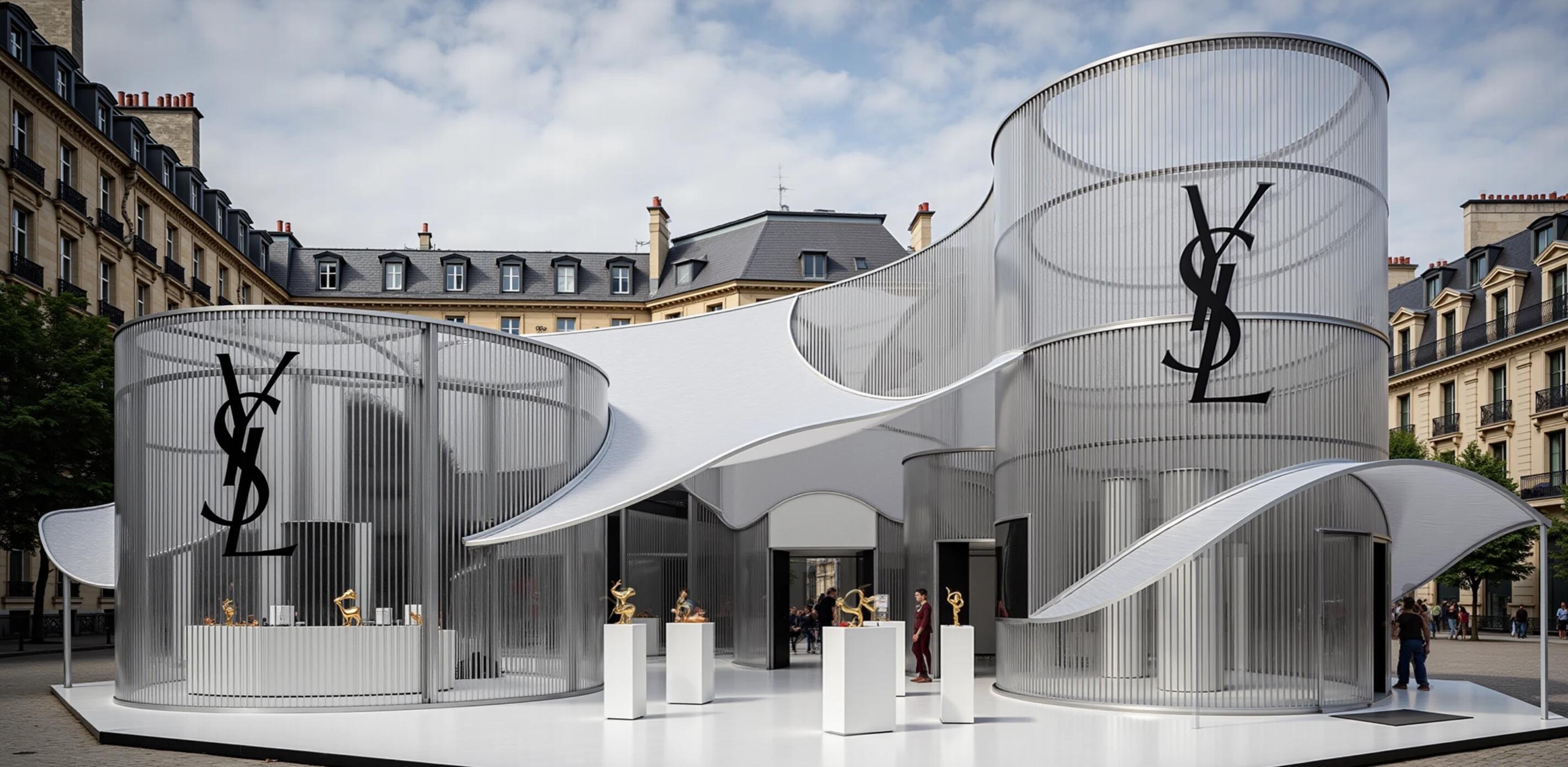 This article delves into several iconic collaborations, analyzing how artistic elements transform into fashion language, and exploring the cultural depth and business acumen behind these partnerships.
A Brief History of Artistic Crossovers: From Decoration to Dialogue
The marriage of art and fashion is not a recent phenomenon. As early as the 1930s, Italian designer Elsa Schiaparelli collaborated with Surrealist artist Salvador Dalí, creating the famous Lobster Dress. This bold attempt to integrate art directly into fashion caused a sensation at the time.
However, contemporary art-luxury collaborations extend far beyond surface decoration. They have become a form of deep, two-way creation, where artists and designers jointly explore the boundaries of material, form, and concept.
Case Studies: The Deeper Meaning Behind Iconic Collaborations
1. Louis Vuitton's Artist Collaborations
Louis Vuitton is a paradigm in the realm of artistic crossovers. Beginning in 2001 with New York artist Stephen Sprouse, who splashed graffiti art over the classic Monogram handbag, this radical颠覆传统的举动 achieved tremendous success.
The ARTYCAPUCINES project represents a deepening of Louis Vuitton's artistic engagements. In 2019, the brand invited six contemporary artists to reinterpret the classic Capucines bag. Chinese artist Liu Wei, drawing inspiration from his large-scale sculpture "Microsphere" exhibited at the 2019 Venice Biennale, used a heat-molding process to shape five different shades of silver leather into specific forms, directly inlaying them onto the bag's body. Meanwhile, artist Zhao Zhao, inspired by his 2018 sculpture "Numinous 3," employed laser-cutting technology to assemble 353 differently treated leather pieces of varying sizes.
These collaborations go beyond merely printing artistic patterns onto handbags; they represent the transformation of an artist's three-dimensional thinking into wearable sculpture, showcasing the limitless potential of luxury goods as vessels for art.
2. Dior's Oriental Fascination
In 2007, then Dior Creative Director John Galliano dedicated an entire Spring-Summer Haute Couture collection to paying homage to Eastern culture. One magnificent gown, based on Katsushika Hokusai's "The Great Wave off Kanagawa," creatively incorporated a dramatic neckline and wide sleeves into Dior's classic "New Look" silhouette.
This collection not only demonstrated a Western interpretation of Eastern aesthetics but also highlighted the unique charm of cross-cultural artistic exchange.
3. Loewe's Craft Revival
Since Jonathan Anderson's appointment as Creative Director of Loewe in 2015, the brand has established "craft revival" as the core of its long-term strategy. Through sustained collaboration with global artists, it translates craftsmanship from diverse fields into its classic collections.
From the earthy, gradient textures inspired by British ceramicist Jennifer Lee to the woven structures drawn from Japanese bamboo artisan Akio Hasegawa, these crafts are not merely decorative but infuse every detail of structure, texture, and tactile sensation.
The Business Acumen Behind Artistic Collaborations: Value Beyond the Surface
Accumulating Cultural Capital
As the CEO of Prada once noted, "Business can buy attention, but only culture wins time." Artistic collaborations help brands accumulate cultural capital—an intangible asset that appreciates over time.
When a brand consistently invests in the same creative partner, it builds an "exclusive aesthetic resource" that can form the foundation of long-term brand memory.
The Shift from Product to Experience
Another significant aspect of luxury-art collaborations is the transformation of consumption scenarios into cultural experiences. Chanel's "Espace Gabrielle Chanel" in Shanghai's Power Station of Art museum complex incorporates not only brand history but also a public contemporary art library, an art theater, and other multifunctional spaces.
This approach positions the brand as a partner in the local public cultural sphere, rather than merely a product supplier.
Future Trends in Artistic Collaboration
From Western-Centric to Global Perspectives
Recently, luxury-art collaborations have shown a clear decentralization trend. Versace recently invited four pioneering Asian artists to create works inspired by the brand's iconic "Medusa" symbol. Chinese artist Yu Jingyi depicted Medusa's surreal birth from the sea using a mirrored composition, presenting the awakening and reshaping of female consciousness through flowing water and a凝固的凝视.
From One-Way Licensing to Two-Way Dialogue
Future artistic collaborations will focus more on deep co-creation rather than simple pattern licensing. Artists are no longer just providing design elements but are deeply involved in every stage, from product development and spatial design to brand storytelling.
Insights for Collectors
For luxury collectors, understanding the stories and values behind artistic collaborations has become an indispensable part of the connoisseurship process. A handbag born from a deep collaboration with an artist is not just a fashion accessory but a portable piece of art, often appreciating in value over time.
The next time you consider acquiring a luxury item, explore its artistic heritage—it might not just be an object, but a vessel for cultural dialogue, a witness to the aesthetics of an era.
The fusion of art and luxury has transcended mere business strategy, becoming a cultural symbiosis. At this intersection, objects surpass their functional attributes to become carriers of ideas, aesthetics, and culture. As demonstrated by Louis Vuitton's collaborations with various artists, when fashion craftsmanship meets artistic soul, the creation is not just a product, but a cultural symbol capable of transcending time.