The Unwavering Allure of Mechanical Watches: Beyond Mere Timekeeping
In an era where time is ubiquitously displayed on smartphones, smartwatches, and every digital screen imaginable, the continued prominence of the mechanical watch is a fascinating anachronism. It defies pure logic. Why would one choose a timepiece that is less accurate, requires regular maintenance, and often commands a price hundreds or thousands of times greater than a perfectly reliable quartz alternative? The answer lies not in the what but in the how and the why. For the discerning individual, a mechanical watch is not merely an instrument for telling time; it is a portable masterpiece of micro-engineering, a tangible link to history, and a profound statement of personal values. It represents a conscious choice for artistry, tradition, and human ingenuity over pure, soulless efficiency.
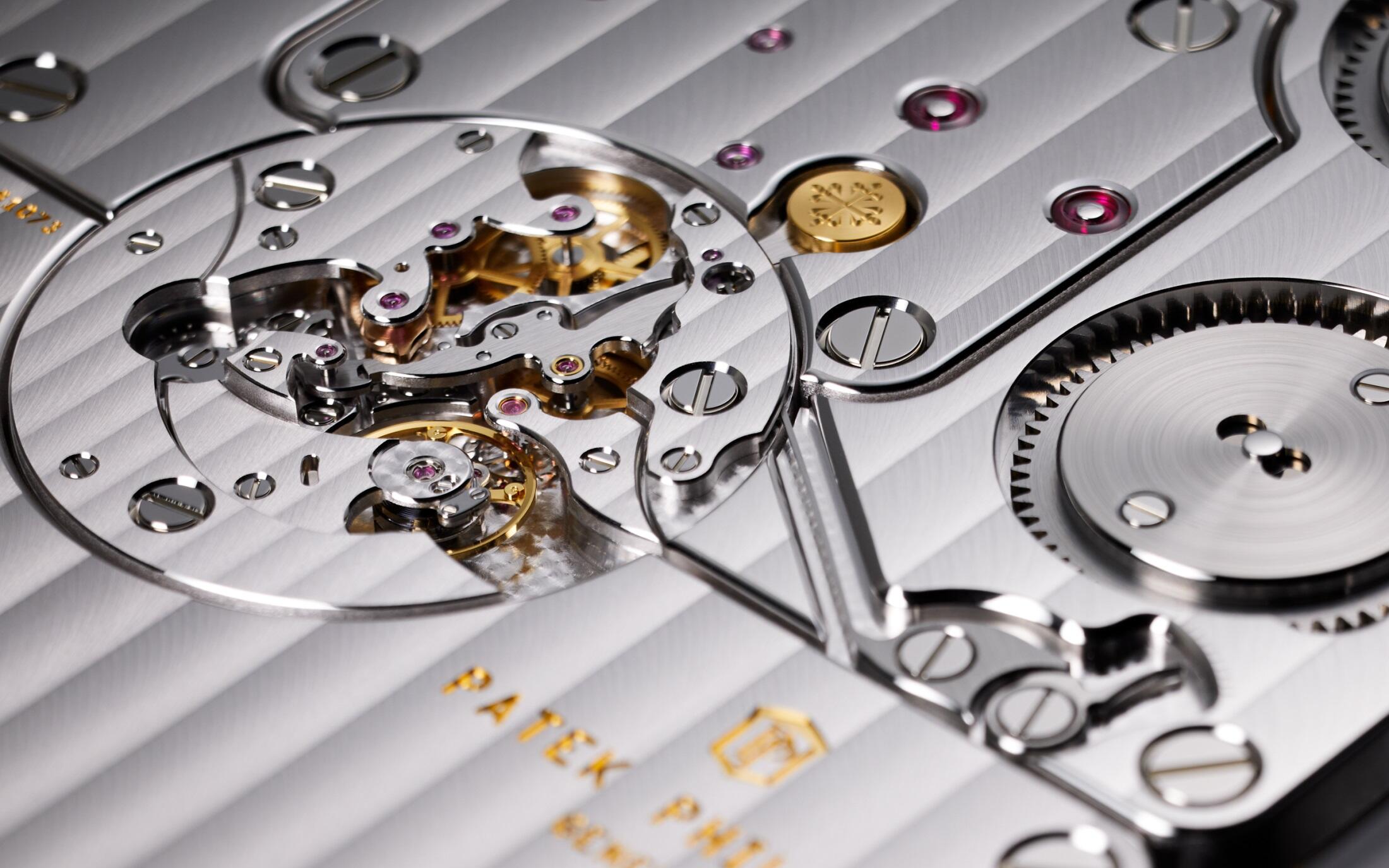
Chapter 1: The Heart of the Matter – The Intricate Soul of a Movement
The fundamental divide between a mechanical watch and an electronic (quartz or smart) watch is philosophical, rooted in their very essence.
A Tale of Two Mechanisms
A quartz watch operates on a simple, brilliant principle: a battery sends an electrical current through a tiny quartz crystal, causing it to vibrate at a precise, high frequency (32,768 times per second). This vibration is counted by a circuit and translated into a single, monotonous pulse per second that drives a motor to move the hands. It is efficient, incredibly accurate, and disposable.
A mechanical watch, however, is a self-contained universe of kinetic energy. Its power comes from a tightly wound mainspring—a ribbon of special steel. As this spring slowly unfurls, it releases energy through a series of tiny, intricately crafted components: gears, levers, and springs. The heartbeat of this system is the balance wheel and escapement, a regulating organ that oscillates back and forth (typically 5, 6, or 8 times per second), dividing time into equal segments and creating the signature, sweeping motion of the seconds hand. This is not a digital pulse, but a physical, breathing rhythm.
The Poetry of Complexity and Craft
This mechanical complexity is where the magic—and the value—resides. A basic mechanical movement comprises over 100 parts, each machined, finished, and assembled by hand under microscopes. High complications like perpetual calendars, minute repeaters, or tourbillons can contain 300, 400, or even 600 parts. This is not necessary for telling time in the 21st century. It is art for engineering's sake.
The craftsmanship is visible to the connoisseur through the art of finissage (finishing):
-
Côtes de Genève (Geneva Stripes): Wave-like patterns engraved on bridges.
-
Perlage: Circular graining on the mainplate.
-
Anglage: The beveling and polishing of the sharp edges of movement parts to a mirrored, 45-degree angle.
-
Black Polishing (Poli Bercy): Finishing a steel component to a flawless, mirror-black sheen.
These finishes serve no technical purpose in improving accuracy. Their sole function is beauty, light play, and to demonstrate the countless hours of human labor invested. They transform the movement from a machine into a micro-sculpture, often revealed through a transparent case back. To gaze upon a finely finished mechanical movement is to witness a miniature universe in motion, a testament to human patience and skill that no circuit board can ever evoke.
Chapter 2: A Legacy on the Wrist – Connection to History and Humanity
Wearing a mechanical watch is an act of participating in a continuous narrative that stretches back centuries.
The Continuity of Knowledge
The fundamental principles of the lever escapement were refined in the 18th century. The skills required to create a hairspring, to polish a pinion, or to adjust a balance wheel are not learned from a manual but passed down from master to apprentice over years, often within the same Swiss valleys. When you own a mechanical watch, you are not just owning an object; you are custodian of a living tradition. You are wearing the cumulative knowledge of generations of watchmakers—a chain of expertise that modern brands like A. Lange & Söhne, resurrected after the Cold War, or independent masters like Philippe Dufour, fiercely protect and perpetuate.
Emotional Resonance and "Wabi-Sabi"
Unlike a digital device with a planned obsolescence of 2-3 years, a fine mechanical watch is built for decades, even centuries, of service. It is designed to be serviced, repaired, and passed on. This longevity fosters a unique emotional relationship. The watch bears witness to your life—it may be a gift marking a milestone, an heirloom from a loved one, or a personal reward for an achievement. Over time, its case may gather gentle scratches, developing a patina that tells your story. This Japanese concept of "wabi-sabi"—finding beauty in imperfection and transience—is inherent to a mechanical object that ages with its owner. An Apple Watch from 2015 is obsolete; a Rolex Oyster from 1955 is a coveted classic, its story just beginning.
The Anti-Disposable Statement
In a world of fast fashion and disposable technology, a mechanical watch is a deliberate antithesis. It is an investment in permanence. Choosing a mechanical watch is a vote for things that last, for repair over replacement, and for depth over fleeting novelty. It slows you down. The daily ritual of winding an automatic watch (feeling the spring tighten through the crown) or setting a manual-wind model creates a moment of quiet, tangible connection between you and a complex, delicate machine. It is a mindful pause in a distracted world.
Chapter 3: The Modern Conundrum – Mechanical vs. The Digital Wave
The rise of the smartwatch has not diminished the mechanical watch's appeal; in many ways, it has crystallized it.
Defining Different Purposes
The smartwatch is a perfect tool for the wrist. It is a notification center, a health tracker, a payment device, and a quick-glance timekeeper. Its value is in its connectivity and functionality. It is an extension of your phone.
The mechanical watch is a piece of personal jewelry with a soul. Its value is in its craftsmanship, heritage, and emotional weight. It is an extension of your personality and values. The two can coexist on the same wrist, worn for different occasions and purposes. One manages your digital life; the other enriches your analog experience.
The Unquantifiable "X-Factor"
No smartwatch algorithm can quantify the feeling of wearing a slim, elegant dress watch that slips perfectly under a cuff, or the solid, reassuring heft of a dive watch that promises adventure. It cannot replicate the pleasure of discovering the unique, almost organic sound of a particular watch's winding rotor, or the fascination of watching a chronograph's heart—the column wheel—click into action through a sapphire case back.
These are sensory, emotional experiences that belong firmly to the realm of human-centric design, not data-centric utility. The mechanical watch offers a refuge from the constant ping of notifications, a piece of the physical world that operates on its own serene, rhythmic terms.
Conclusion: The Timeless Choice
The mechanical watch survives and thrives not despite its anachronisms, but because of them. In its intricate gears, we see a refusal to let ancient crafts die. In its need for winding, we find a welcome ritual. In its longevity, we place our hope for permanence in an impermanent world.
For the individual of taste, it is the ultimate choice because it speaks of a deeper understanding. It acknowledges that the most valuable things in life are often not the most efficient, and that true luxury is not about price alone, but about possessing objects with a story, a soul, and a heartbeat of their own. In the quiet tick of a mechanical movement, one hears not just the passage of time, but the enduring pulse of human creativity itself.