The Modern Bar Jacket: From Haute Couture to Your Wardrobe
If the first chapter of the Bar Jacket's story is one of revolutionary creation, the second is a testament to its extraordinary adaptability. From the hallowed halls of 30 Avenue Montaigne to the streets of global capitals, the Dior Bar Jacket has proven that its most radical feature is not its waist-cinching shape, but its timeless relevance. This journey from a specific post-war ideal to a versatile modern wardrobe staple reveals how true design genius transcends its original moment, inviting continuous reinterpretation while maintaining its soul.
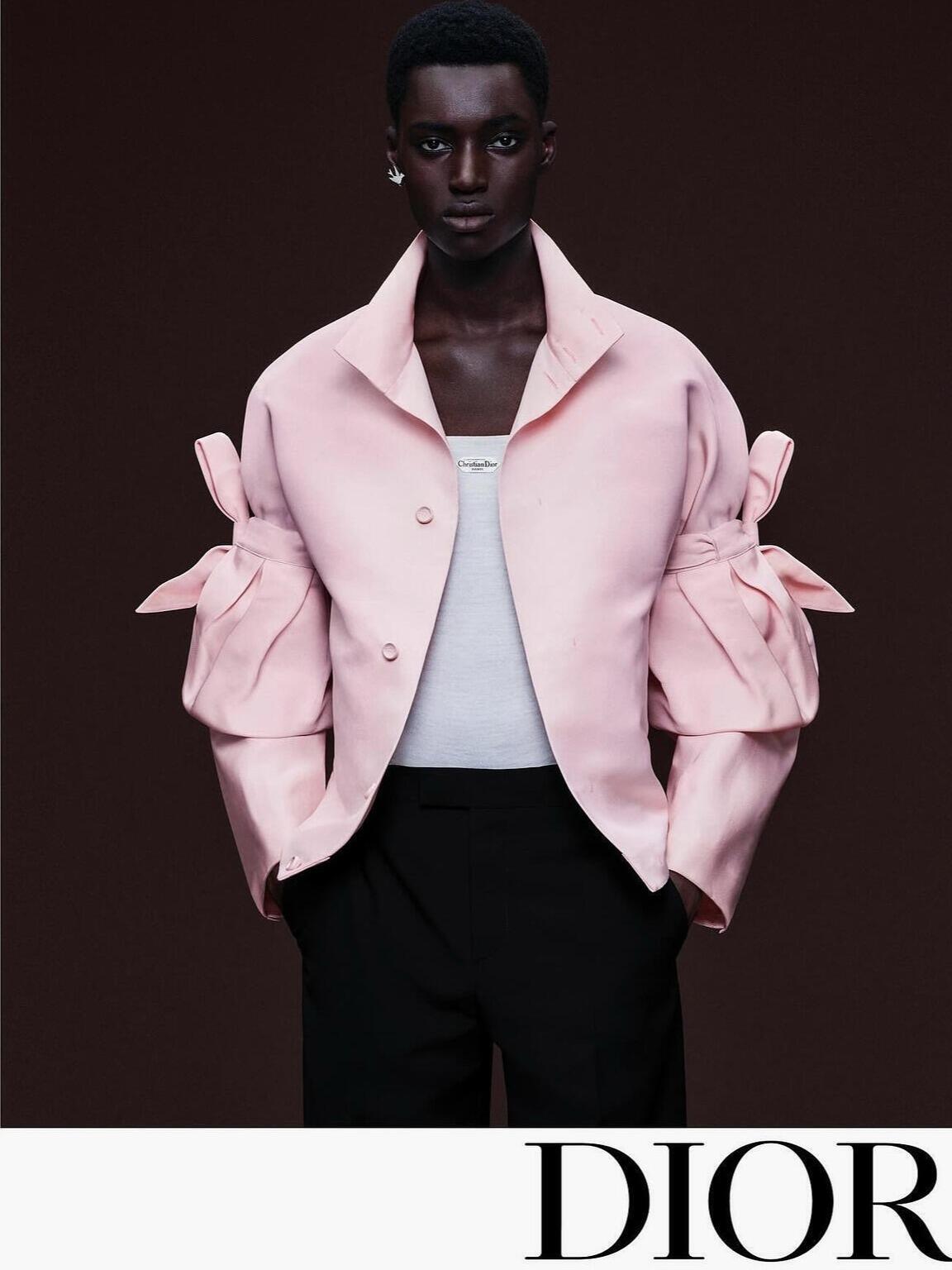
I. The Global Language of a Silhouette: Beyond Western Ideals
Initially, the New Look embodied a very specific, Parisian vision of femininity. Its rapid global dissemination, however, led to fascinating cultural translations. In the 1950s, as images from Dior's collections reached Japan, local dressmakers and a burgeoning fashion industry faced a sartorial conundrum: how to adapt a silhouette designed for a different body type and cultural context.
Japanese practitioners didn't merely copy; they engaged in a sophisticated process of "domestication." They analyzed the jacket's architectural principles—the bust dart, the waist suppression, the hip construction—and recalibrated them. The shoulder line might be softened further, the padding in the hips reduced to suit a straighter profile, and the overall scale adjusted. This wasn't dilution; it was dialogue. It proved that the Bar Jacket's core value was its sculptural approach to the body, not one fixed set of measurements. This early globalization set a precedent: the jacket was a classic that could—and should—be made to serve the individual.
This concept of personalized adaptation lies at the heart of haute couture today. A client ordering a Bar Jacket in the Dior atelier does not receive a standard size. Through multiple fittings, the canvas base is subtly adjusted—a dart moved a millimeter, a seam let out, the curve of a basque softened—until the iconic silhouette becomes a perfect mirror of the client's own form. This process transforms the jacket from a famous object into a personal artifact, embedding it with intimate significance that ready-to-wear cannot replicate.
II. Breaking the Code: The Creative Directors' Dialogue
Each Dior creative director has conducted a unique dialogue with this house icon, using it to express their vision while honoring its legacy.
-
Yves Saint Laurent (1958-1960): The protégé showed profound respect. His 1958 "Trapeze" line, while diverging from the nipped waist, retained an understanding of volume and structure learned from the Bar Jacket's architecture. He preserved its spirit of luxurious fabrication and precise tailoring, even as he explored new shapes.
-
John Galliano (1996-2011): Galliano approached fashion as theatre, and his Bar Jackets were often leading characters. He exaggerated its proportions, rendered it in exotic materials like leopard-print pony skin or neo-Victorian brocade, and draped it over fantastical skirts. He proved the jacket could be a vehicle for extreme narrative and romance without losing its identifiable core structure.
-
Raf Simons (2012-2015): The modernist. Simons' seminal move was the pantalon-bar pairing. By stripping away the full skirt and presenting the jacket with crisp, fluid trousers, he liberated it from a specific era and gender expectation. His Bar Jackets were often in technical fabrics or stark white cotton, emphasizing line and purity over decoration. He redefined it as a uniform for a contemporary, intellectual elegance.
-
Maria Grazia Chiuri (2016-Present): As the first female director, Chiuri has grounded the jacket in a feminist ethos. She asks what such an iconic garment means when seen through a female gaze. Her answer has been to explore both its power and its possibility. She has presented it in strong, almost militant black and white, collaborated with female artists to print it with thought-provoking messages, and, most revolutionarily, rendered it in soft, forgiving knitwear. This knitted Bar Jacket for AW 2020 was a masterstroke—it offered the silhouette's confidence and elegance while literally making it more comfortable and accessible, a symbol of strength that doesn't constrain.
III. Wearing the Legacy: Your Modern Bar Jacket
The true test of a fashion icon is its wearability. Today, the Bar Jacket ethos—a structured, waist-defining blazer—is more accessible than ever, available from Dior's luxury lines to high-street interpretations. The key to wearing it is to forget dogma and embrace its versatility.
1. The Foundation: Finding Your Fit
Whether investing in a designer piece or a well-tailored high-street alternative, fit is paramount. The modern interpretation should nip at your natural waist and allow comfortable movement across the shoulders and back. Don't be afraid to have a ready-to-wear jacket tailored; it is the single best investment to elevate any garment.
2. Style Archetypes for the Modern Wardrobe:
-
The Classicist: Pair a black or navy wool Bar-style blazer with its natural partner—a midi skirt (pencil or A-line). Add a simple silk shell, pumps, and pearls for a look that is eternally polished and professionally powerful.
-
The Modernist (à la Raf Simons): This is the most influential look today. Wear your jacket over a simple white t-shirt or a fine-gauge turtleneck with straight-leg, tailored trousers (crepe, wool, or even a dark, clean denim). Finish with minimalist loafers or sleek ankle boots. It’s intelligent, effortless, and sharp.
-
The Romantic (à la Galliano): Play with contrast. Layer a structured Bar Jacket over a floaty, floral tea dress. The juxtaposition of hard and soft is deeply chic. Alternatively, wear it with a voluminous silk skirt for a dramatic evening look.
-
The Rebel (à la Chiuri): Take a page from Chiuri's book and subvert expectations. Wear a knitted Bar-style cardigan over cargo pants or a pleated tennis skirt. Pair a traditional tailored version with ripped jeans and a band t-shirt. The jacket instantly adds sophistication and shape to casual pieces.
3. Beyond the Jacket: The "Bar" Principle
The Bar Jacket's ultimate lesson is about silhouette awareness. You can apply its philosophy without wearing the jacket itself. Seek dresses that define your waist. Look for coats with similar seaming. Choose knitwear that borrows its peplum or bustier shape. The goal is not costume, but to incorporate that celebrated, confident proportion into your personal style language.
Conclusion: An Eternal Revolution
From its explosive debut in 1947 to its quiet presence in a contemporary wardrobe, the Dior Bar Jacket has undergone a remarkable metamorphosis. It has been a symbol of luxury, a subject of cultural exchange, a canvas for artistic vision, and finally, a tool for personal expression.
Its revolution was never truly about the past. It was about proposing a form of dressed confidence so compelling that every generation feels compelled to reclaim it and make it their own. It teaches us that in fashion, as in art, the most enduring creations are not those that remain frozen in time, but those that possess the depth and integrity to sustain an endless, vibrant conversation with the future. To wear a Bar Jacket—or any garment inspired by its principles—is to participate in that ongoing dialogue, adding your own verse to a timeless poem of elegance.