The Heartbeat of Horology: How the Jura Mountains Forged Switzerland's Watchmaking Soul
This is the Jura Mountains, a serene, often inhospitable landscape of pine forests and silent valleys that stands in stark contrast to the financial hubs of Zurich and Geneva. Yet, here, in this unlikely setting, the very soul of Swiss watchmaking was born and meticulously perfected. This is not a story of corporate boardrooms, but of isolated farmhouses, stubborn innovation, and a human-scale artistry that transformed a necessity into the world's most coveted micro-art.
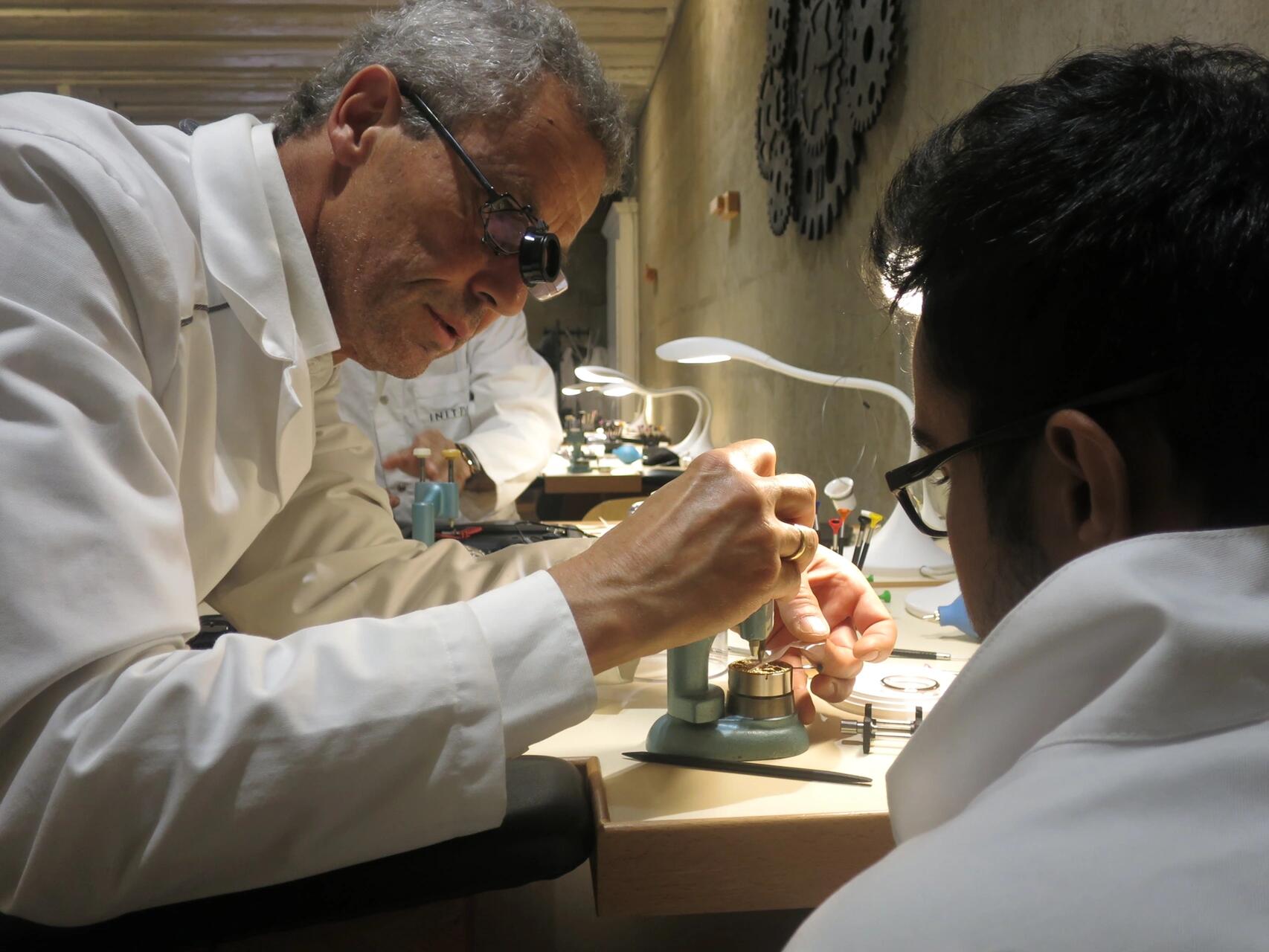
A Refuge and a Crucible: Geography as Destiny
To understand Swiss watchmaking, one must first understand the Jura. Historically poor in agricultural resources and cut off by harsh winters, the region's inhabitants—primarily farmers—faced long, idle months when the land was frozen. This enforced stillness became the cradle of immense manual dexterity and patience. During the 16th and 17th centuries, as the Protestant Reformation swept through Europe, French Huguenot craftsmen, many of them skilled goldsmiths and watchmakers, fled persecution. They found a welcoming refuge in the Jura's Calvinist cities like Geneva at first, but soon, space and competition pushed the craft northward into the valleys.
This migration was the seed. The Jura's farmers, already adept at crafting tools and repairing machinery in their secluded homesteads, possessed the perfect mindset: self-reliance, precision, and a deep understanding of mechanics. They began to take on piecework (établissage) for Genevan watchmakers, assembling components in their own homes. Thus, the legendary "atelier" culture was born—not in a factory, but in the family workshop, often in the very room where the family lived. The ticking of a movement being calibrated would blend with the sound of the hearth fire. This decentralized, network-based system, unique in the world, meant that expertise was not concentrated but diffused through entire communities, each specializing in a specific component: wheels in one village, springs in another, cases in a third.
From Cottage to Crown: The Evolution of a Legend
The 19th century marked the Jura's ascent from a network of suppliers to the undisputed epicenter of global horology. Pioneers like Abraham-Louis Breguet (though he worked in Paris, his innovations were foundational) inspired a spirit of invention. But it was Jura-born visionaries who industrialized the craft while preserving its artisanal heart.
The Founding Families & The Vallée de Joux: The deep valley of the Jura, the Vallée de Joux, became the sacred ground of high watchmaking. Here, families like Audemars and Piguet combined their skills in 1875 to found Audemars Piguet in the village of Le Brassus, driven by a desire to create the world's most complex watches under their own roof, refusing outside capital. Similarly, the LeCoultre family in the neighboring Vallée de Joux village of Le Sentier had already established their Manufacture in 1833, mastering every step of the process. This vertical integration—controlling everything from smelting metals to the final assembly—became the gold standard.
The Spirit of "Complications": Isolated by the deep winter snows, the watchmakers of the Vallée de Joux turned inward, focusing not on quantity, but on breathtaking mechanical complexity. They competed to create the most ingenious "complications"—chiming minute repeaters, perpetual calendars that accounted for leap years, and astronomical displays. This was no longer just timekeeping; it was mechanical philosophy, a way to conquer celestial time through miniature engineering. The legendary watchmaker’s bench in a quiet Jura farmhouse became a portal to the cosmos.

The Enduring Ethos: Patience in the Silence
The legacy of the Jura is not merely a list of brands or inventions. It is an ethos. It is the belief that:
-
Time is the Ultimate Raw Material: The Jura watchmaker understands that to master time, one must first submit to its passage. A watch is not rushed.
-
The Whole is in the Part: Even the tiniest screw, invisible to the wearer, is finished with care, because integrity in the hidden places guarantees integrity in the whole.
-
Tradition is a Living Language: The handcrafting techniques passed down for generations—the filing, polishing, and assembly by hand—are not museum pieces. They are the living vocabulary used to write new chapters of innovation.
Today, when you hold a fine Swiss watch, you are holding a piece of this geography and culture. You hold the patience of the long winter, the ingenuity born of necessity, and the quiet, obsessive pride of the artisan working alone at his bench, ensuring that a single gear interacts flawlessly with its neighbor. The Jura Mountains prove that true luxury is not about ostentation, but about a profound, human connection to materials, time, and an unbroken tradition of excellence that continues to tick against all odds. This is where the legend was forged, not in fire, but in deliberate, purposeful cold.