- Home
- Beyond the Basics: A Deep Dive into Advanced Mechanical Movements
Beyond the Basics: A Deep Dive into Advanced Mechanical Movements
We learned the graceful ritual of the manual-wind and the ingenious convenience of the automatic. But the world of horology extends far beyond these core principles. For those captivated by the "how," this next chapter ventures into the specialized, high-performance engines and avant-garde architectures that push the boundaries of what a mechanical watch can be. Here, we transition from understanding timekeeping to appreciating technical mastery, innovation, and the pursuit of theoretical perfection. This guide will illuminate three advanced domains: the dynamic complexity of the chronograph, the endurance challenge of long power reserves, and the precision frontier of high-frequency escapements.
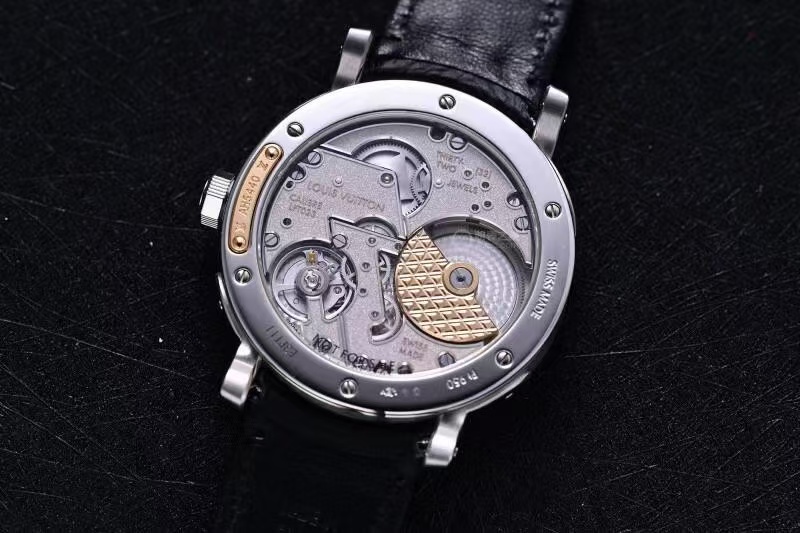
Part 1: The Chronograph – The Master of Measured Time
The chronograph is arguably the most popular and visually captivating complication. It is a stopwatch built into a wristwatch, allowing the measurement of elapsed intervals. Beneath its dynamic dial (with sub-dials and sweeping central seconds) lies one of watchmaking's most intricate mechanical ballets.
Core Working Principle:
A standard chronograph is an independent timing system laid on top of a base timekeeping movement. At its heart is the column wheel or cam system—the "brain" that controls the start, stop, and reset functions.
-
The Engagement (Start): Pressing the top pusher engages the chronograph. A series of levers, commanded by the column wheel, drops a coupling clutch into place. This clutch connects the constantly-running fourth wheel of the base movement to the chronograph's central seconds wheel, setting the chrono hand in motion.
-
The Pause (Stop): A second press stops the chronograph hand by disengaging the clutch via the column wheel.
-
The Reset (Return-to-Zero): Pressing the bottom pusher activates a heart-piece cam under each chronograph sub-dial. This cam, in conjunction with a hammer, snaps all chronograph hands back to zero instantly.
The Great Debate: Column Wheel vs. Cam System
-
Column Wheel: Shaped like a tiny turret with stepped teeth, it is considered the traditional, high-horology method. Its operation is famously smooth, requiring less pusher pressure and producing a satisfyingly crisp tactile feedback. It is more complex to machine and assemble, often found in premium chronographs from brands like Breitling (in their in-house B01 caliber) or Patek Philippe.
-
Cam System: Uses a series of robust, stamped metal cams and levers. It is more economical to produce, robust, and serviceable. While its action can feel slightly less refined, modern engineering has perfected it to be extremely reliable. It is the workhorse of the industry, used famously by Omega in their celebrated Speedmaster Moonwatch.
The Innovation: The Vertical Clutch
Traditional chronographs use a lateral or horizontal clutch, which can cause a slight jump in the chronograph hand upon engagement. The vertical clutch, pioneered in wristwatches by Seiko and perfected by others like Rolex (Caliber 4130), solves this. Here, two discs stack vertically; one constantly rotates with the base movement, the other is attached to the chronograph hand. Engaging the chronograph slides the two discs into contact frictionally, ensuring a perfectly smooth, instant start with no jolt.
Part 2: The Long Power Reserve – A Quest for Autonomy
While a standard movement runs for 40-80 hours, the pursuit of a long power reserve is an exercise in energy efficiency, storage, and management. Creating a movement that runs for days, weeks, or even months on a single wind is a monumental technical challenge.
Engineering the Endurance:
Achieving a long reserve isn't as simple as just using a bigger mainspring. A longer, stronger spring creates more tension, which can negatively impact timekeeping consistency (amplitude) as it unwinds.
-
The Tandem Barrel: The most common solution. Two mainspring barrels are connected in series, effectively doubling the length of available spring power without drastically increasing its force. This is seen in movements like Panerai's P.5000 calibers, offering 8-day reserves.
-
The Extra-Long Mainspring & Special Alloys: For extreme reserves, a single, exceptionally long spring made from innovative alloys (like Nivachron by Swatch Group, which is anti-magnetic and stable) is housed in a large barrel. H. Moser & Cie., for instance, offers a 7-day reserve using this approach.
-
The Remontoire or Constant Force Mechanism: This is the holy grail for long-power watches. It is a secondary, intermediary spring that is rewound every few minutes by the main power source. This small spring then delivers a perfectly constant, unchanging force to the escapement, neutralizing the torque drop of the mainspring. The A. Lange & Söhne Lange 31, with its staggering 31-day power reserve, employs a groundbreaking double-remontoire system to maintain precision throughout its entire month-long run.
The Trade-Off: Watches with very long reserves often forgo automatic winding, as a rotor would add thickness and complexity to an already large movement. They become modern embodiments of the manual-wind ritual on a grand, weekly scale.
Part 3: High-Frequency Escapements – The Search for Ultimate Precision
The balance wheel's frequency (measured in vibrations per hour, or vph) is a key factor in potential accuracy. A higher frequency means the watch divides time into smaller, more measurable increments, theoretically making it less susceptible to disturbance from shocks or positional variance.
Understanding the Beat:
-
Standard Frequency: 21,600 vph (3 Hz) or 28,800 vph (4 Hz). The balance wheel oscillates 8 or 10 times per second, respectively.
-
High Frequency: 36,000 vph (5 Hz) and above. The balance oscillates 10 times per second or more.
The Advantages and The Toll:
Advantage: Precision. A 5Hz movement divides a second into 10 parts, allowing for finer regulation and potentially better short-term accuracy and stability. Grand Seiko's Hi-Beat 36000 movements are renowned for their exceptional smoothness of the seconds hand and precision.
The Toll: Energy & Wear. The downside is physics. Moving the escapement components back and forth at such incredible speeds consumes significantly more energy (reducing power reserve) and increases wear on the lubrication points. It demands exceptional engineering:
-
Lighter, Harder Materials: Balance wheels and hairsprings are made from advanced alloys like Silicium (Silicon). Silicon is lightweight, anti-magnetic, and doesn't require lubrication.
-
Efficient Gear Train Design: Reducing friction at every point to conserve the energy consumed by the fast-beating escapement.
-
Advanced Lubricants: Where metal-on-metal contact exists, it requires stable, long-lasting synthetic oils.
The Zenith Defy Lab – A Glimpse of the Future:
Pushing frequency to its extreme, Zenith's Defy Lab movement operates at an astonishing 108,000 vph (15 Hz). It achieved this by radically rethinking the escapement, replacing the traditional balance spring and lever with a single piece of etched silicon that oscillates in a novel geometry, drastically reducing friction and energy consumption. While not yet mainstream, it points to the future of chronometry.
Conclusion: The Never-Ending Quest
The journey into advanced mechanical movements reveals that horology is a living, breathing field of innovation. It is not trapped by tradition but is propelled by it. The chronograph showcases mechanical interactivity at its most engaging. The long power reserve embodies a philosophical and engineering challenge of autonomy. The high-frequency escapement represents the relentless, scientific pursuit of an unattainable ideal: perfect, immutable time.
For the enthusiast, these technologies are not mere specifications on a sheet. They are stories of human problem-solving, tangible evidence of a brand's technical philosophy, and the reason a watch becomes more than an accessory—it becomes a wrist-worn engine of fascination. Understanding these depths allows one to appreciate not just the time a watch tells, but the immense ambition and artistry contained within the millimeters of its case.